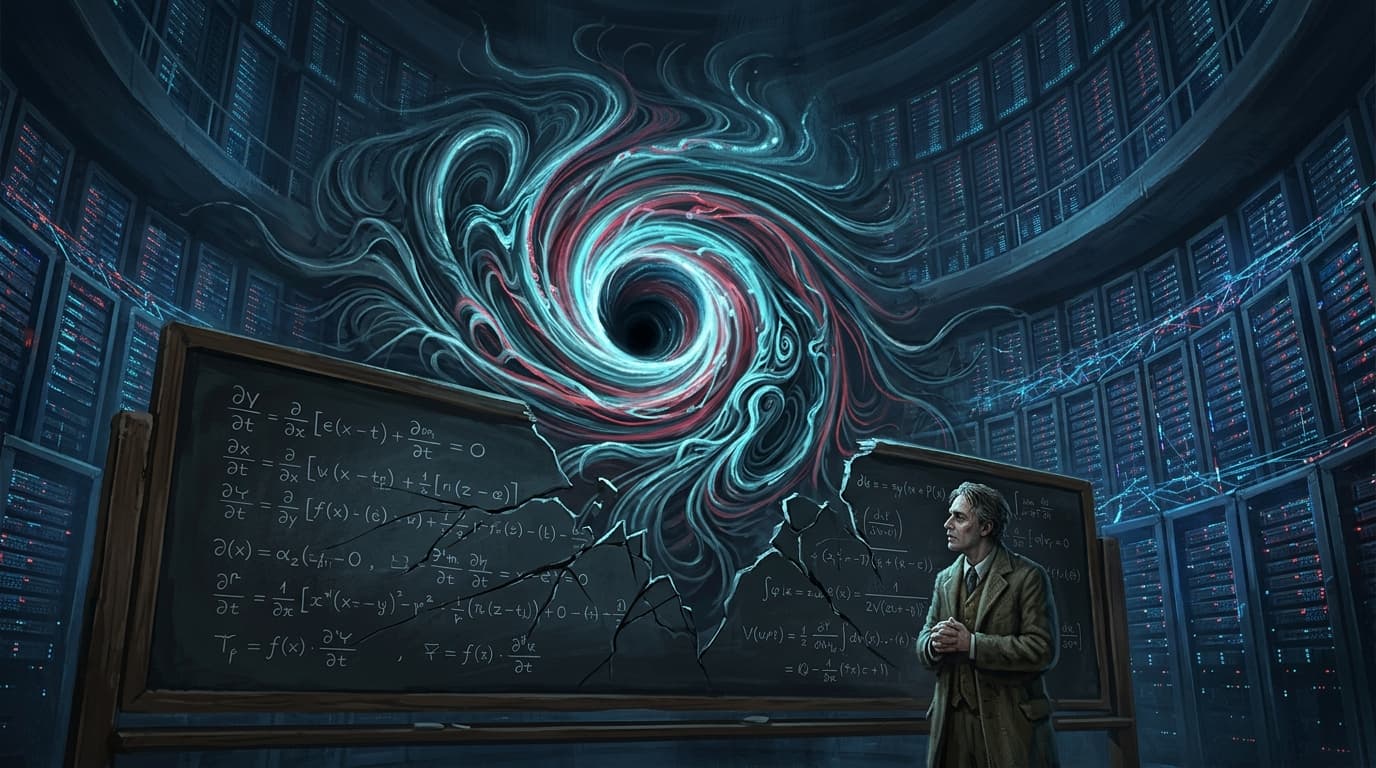
We live in the age of the mimic. If you spend any time with modern LLMs, you know the drill: they can write poetry, debug code, and summarize thousands of documents in seconds. But beneath that polished, human-like output lies a fundamental fragility. They are probabilistic engines, not logical ones. They predict the next likely token, not the next necessary truth.
When I look at where we’re going next, the hype isn't just about bigger models. It’s about the Neuro-Symbolic Shift.
The Problem with Pure Connectionism
Current AI models are purely "neural." They are vast, complex webs of neurons firing in response to patterns. This gives them their intuition—their ability to handle nuance, language, and creativity. But these systems are notoriously bad at basic logic. They fail at simple arithmetic, they hallucinate facts, and they struggle to explain why they arrived at a specific conclusion.
If we want AI that we can trust with critical infrastructure, legal frameworks, or complex scientific discovery, we need more than just good guessing.
Enter the Symbolic Bridge
Symbolic AI—the older brother of the current machine learning wave—is built on rules, logic, and structured knowledge graphs. It doesn't "learn" in the same way; it "knows." It excels at consistency, verifiability, and structured reasoning.
Neuro-symbolic AI is the marriage of these two worlds. Imagine a system that uses a massive neural network for perception and intuition, but then pipes those insights into a symbolic layer that checks them against a rigid framework of rules and logical constraints.
It’s the difference between a student who has memorized every answer in the textbook versus one who truly understands the underlying principles of the subject.
Why It Matters
- Verifiability: Instead of hoping the model is right, we can mathematically trace its reasoning through the symbolic layer.
- Efficiency: We don't need to retrain a 10-trillion parameter model every time a fact changes. We can simply update the symbolic knowledge base.
- Reasoning: It enables the AI to handle tasks that require long-term planning, multi-step logic, and adherence to strict ethical or regulatory boundaries.
The future of intelligence isn't just bigger and faster. It’s deeper. We are moving from the era of "guess-work" to the era of "truth-work." As we continue to build, the most powerful systems won't be the ones that can talk the fastest, but the ones that can think the most clearly.
Hana