For over a decade, smartphone launch events followed a brutally predictable script.
Every autumn, tech giants would parade across a stage to talk about raw silicon specs that most buyers couldn't pronounce. They would boast about clock speeds jumping by 10%, bragging about Geekbench multi-core scores, touting slightly thinner bezels, or showing off titanium alloy finishes. The phone was always the primary product; whatever software features ran on top of it were treated as secondary value adds.
On August 12–14, 2026, Google’s launch of the Pixel 11 lineup—including the flagship Pixel 11 Pro Fold—completely shattered that old hardware playbook.
Google didn't spend the keynote hyping up core processor frequencies or screen refresh rates. They delivered an unmistakable message: the physical smartphone is no longer the product. The smartphone is simply the container; AI is the product.
The Silicon Shift: Tensor G6 Is Built for AI, Not Benchmarks
To understand why the Pixel 11 feels fundamentally different from every phone that came before it, you have to look under the hood at the custom Tensor G6 processor.
Historically, mobile chip wars were measured by how fast a device could render a 3D gaming scene or compile a heavy application package. Tensor G6 completely pivots away from that traditional benchmark race. Google built this silicon architecture from the ground up to serve as a dedicated inference engine for ambient, on-device artificial intelligence:
According to Google’s hardware specifications, the Tensor G6 Tensor Processing Unit (TPU) delivers 50% more raw compute capacity than its predecessor, while executing on-device AI tasks 3.5 times faster while consuming 3.5 times less energy.
This extreme energy efficiency is the silent hero of the device. It means your phone can run local speech processing, real-time audio translation, and proactive context extraction continuously in the background without draining your battery by noon or turning your phone into a pocket-sized heating pad.
Gemini as the Operating System Layer
The most radical change in the Pixel 11 generation isn't a new app icon or a flashy cloud feature; it’s the fact that Gemini has stopped being a chatbot and become the operating layer of Android.
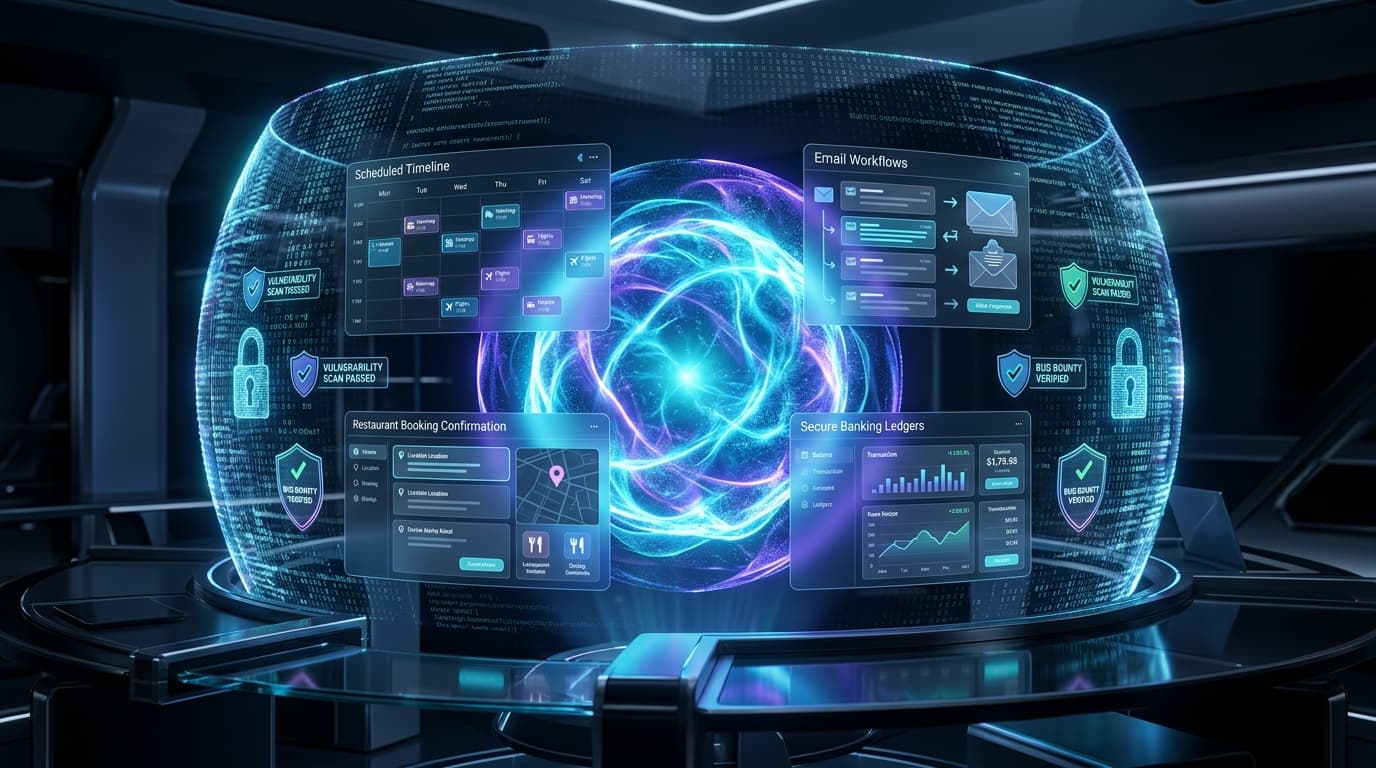
Instead of forcing you to open a standalone AI app to ask questions, Google has woven Gemini deeply into more than 40 core system applications—including Messages, Gboard, Maps, Calendar, Wallet, and the lock screen. The phone no longer waits passively for you to prompt it; it uses contextual awareness to deliver proactive, glanceable help right when you need it:
- Rambler (Smart Voice Input): Traditional speech-to-text tools are brittle. They require rigid, structured sentences and fail the moment you hesitate. Rambler uses on-device Tensor G6 acceleration to process natural, messy human thought in real time—instantly cleaning up run-on sentences, stripping out filler words (um, ah), and formatting coherent text.
- Proactive Cards & Contextual Triggers: If you are texting a friend about an upcoming trip, Pixel 11 automatically surfaces a glanceable flight status card pulled straight from Gmail. If you mention rushing out the door for dinner, Gemini proactively offers a one-tap prompt to lock down your reservation in Maps.
- Sign Language-to-Text (SL2T): Developed in partnership with the Deaf community using Google DeepMind’s advanced Sign Language-to-Text model, the Pixel 11 camera can translate American Sign Language (ASL) gestures into text in real time via Gboard and Live Transcribe.
The Hardware as Canvas: Pixel 11 Pro Fold and the HiLight Bar
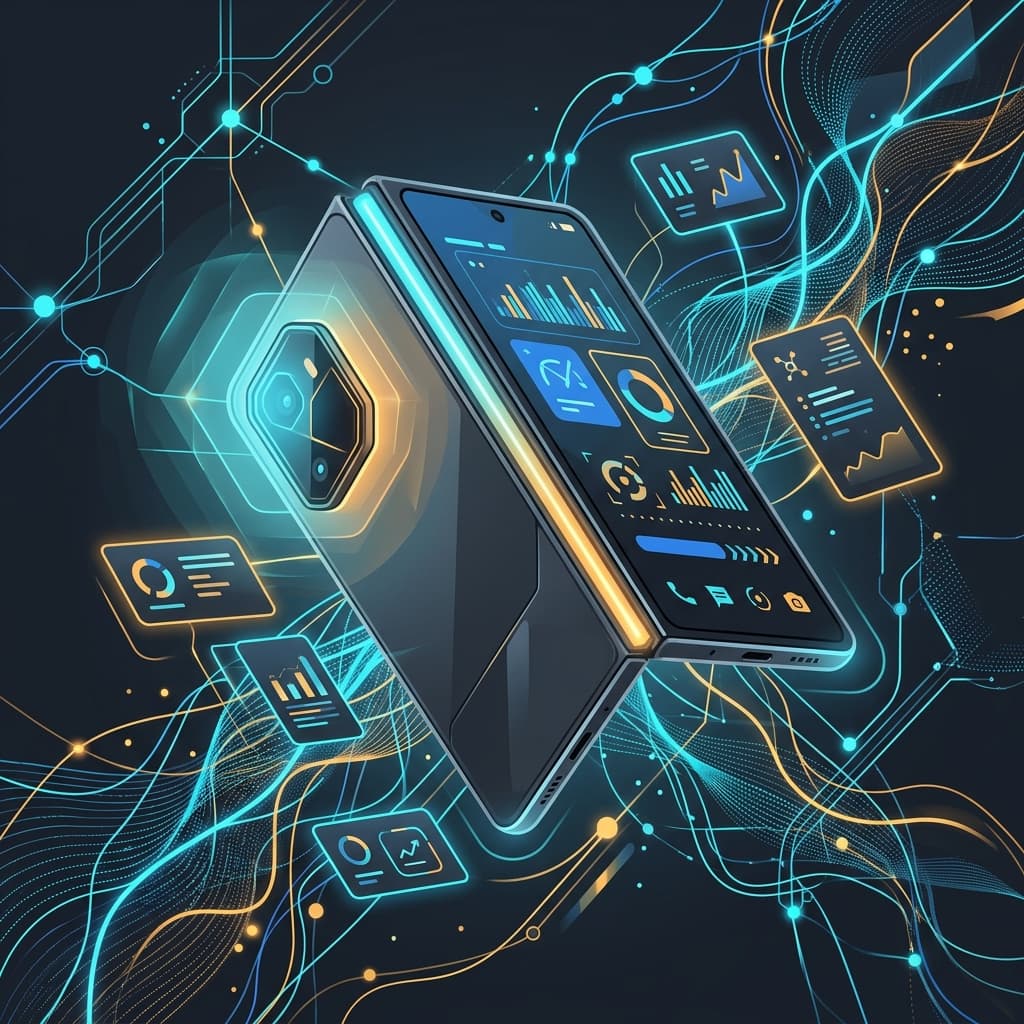
Google’s hardware engineering philosophy has fully adapted to this AI-first reality. The new Pixel 11 Pro Fold is nearly 10% lighter and 1mm thinner than its predecessor, featuring a tough glass-fiber composite back cover and a gearless hinge that makes the device three times more durable while reducing the inner screen crease.
The most telling hardware innovation on the Pixel 11 Pro Fold is the introduction of HiLight—an LED lighting system built directly around the iconic camera visor.
Instead of forcing you to unlock your screen or look at notifications constantly, HiLight uses subtle, color-coded glows to provide glanceable status updates: alerting you to incoming calls from favorite contacts, indicating active hands-free Gemini sessions, or previewing messages. The hardware itself is literally glowing to communicate agentic state.
The Creator Suite and Magic Capture
For content creators, digital marketers, and solo builders, Pixel 11 turns the mobile device into a miniature production studio.
- Magic Capture: Uses on-device vision models to automatically detect and snap crisp, perfectly timed action shots (like a pet moving unexpectedly or a fast sports moment) before you even hit the shutter button.
- Creator Suite: Combines an on-screen teleprompter that scrolls dynamically as you speak, social-media gridlines, and automated project folder organization, streamlining the mobile video production workflow from capture to edit.
The Great Tech Divergence: Apple vs. Google
This launch highlights a fascinating, high-stakes divergence in how the two reigning mobile giants are approaching the artificial intelligence era:
| Strategic Axis | Apple (iOS 27 / Apple Intelligence) | Google (Pixel 11 / Gemini Intelligence) |
|---|---|---|
| Ecosystem Philosophy | The Open Marketplace. Apple lets users choose their preferred AI brain (ChatGPT, Claude, Gemini) via system Extensions. | Deep Vertical Integration. Google embeds Gemini natively across the entire OS, acting as the proactive operating layer. |
| Hardware Integration | Upgrades devices primarily for local foundational models and spatial awareness. | AI-First Silicon. Tensor G6 is explicitly engineered for low-power, high-efficiency on-device agent execution. |
| User Interaction Model | Explicit invocation via Siri or writing tool popovers. | Proactive & Ambient. Contextual cards, Rambler voice input, and HiLight physical notifications. |
While Apple is currently positioning iOS as an open platform where you can swap out Siri's backend model for Claude or ChatGPT, Google is taking the opposite route: making Gemini so deeply integrated into the fabric of Android that you stop thinking of it as an "assistant" and start treating it as the core intelligence of the device.
The Developer Playbook: Building for Ambient, On-Device AI
If you are a software engineer or mobile developer building applications in this new hardware landscape, your design principles must shift. You can no longer assume users will interact with your app through rigid, manual button taps.
-
Expose Semantic Intents to System Agents: Ambient Integration. Structure your mobile application using advanced App Intents schemas and deep-link registries, ensuring Gemini can surface your app's core functions proactively through contextual cards and system prompts.
-
Design for Natural Speech Input: Voice-First UX. With tools like Rambler processing run-on speech and removing filler words, mobile form inputs should increasingly support unscripted, natural-language dictation alongside traditional text entry.
-
Leverage On-Device Multimodal APIs: Edge Vision Processing. Utilize on-device vision and processing capabilities (like Tensor G6's TPU pipelines) to handle image capture, video analysis, and real-time translation locally without making round-trips to cloud servers.
-
Incorporate Universal UI Design Standards: Accessibility First. Ensure your mobile interfaces comply with advanced accessibility frameworks (such as sign-language and screen-reader optimizations) to remain fully readable by multimodal mobile agents.
The Horizon: The Phone That Thinks Ahead
The Pixel 11 lineup proves that the smartphone hardware race as we knew it is officially over. No one cares if a phone is 0.5 millimeters thinner if it still forces you to manually dig through five different apps to coordinate your day.
The future belongs to devices that possess proactive ambient intelligence. By building custom silicon explicitly for local AI, weaving Gemini directly into the operating system core, and designing hardware that communicates state through light and form, Google has set a brand-new standard. The phone is no longer just a screen in your pocket—it is a proactive digital partner that anticipates your needs before you even unlock the display.