The conversation around Artificial Intelligence in 2026 has hit a physical wall: electricity. While we’ve been obsessed with model intelligence, parameter counts, and reasoning capabilities, a much more pragmatic, "silent" revolution is happening in the background—the race for energy-efficient AI.
It’s easy to get caught up in the hype of "agentic" systems and massive infrastructure projects, but if we don't fix the energy equation, the growth of AI risks becoming unsustainable.
Efficiency as the New North Star
For a long time, the primary optimization metric for AI models was performance—accuracy, benchmarks, and reasoning speed. Now, "energy per inference" is becoming just as, if not more, critical.
We are seeing a move away from the "bigger is better" mantra toward models that are hyper-optimized for specific tasks, capable of running on edge devices without needing a constant connection to a massive, energy-hungry data center.
The Shift to Local Intelligence
On-device AI isn't just about privacy; it's about physics. Moving computation closer to the source—whether it’s a smartphone, a wearable, or a smart sensor—reduces the energy cost of data transmission significantly.
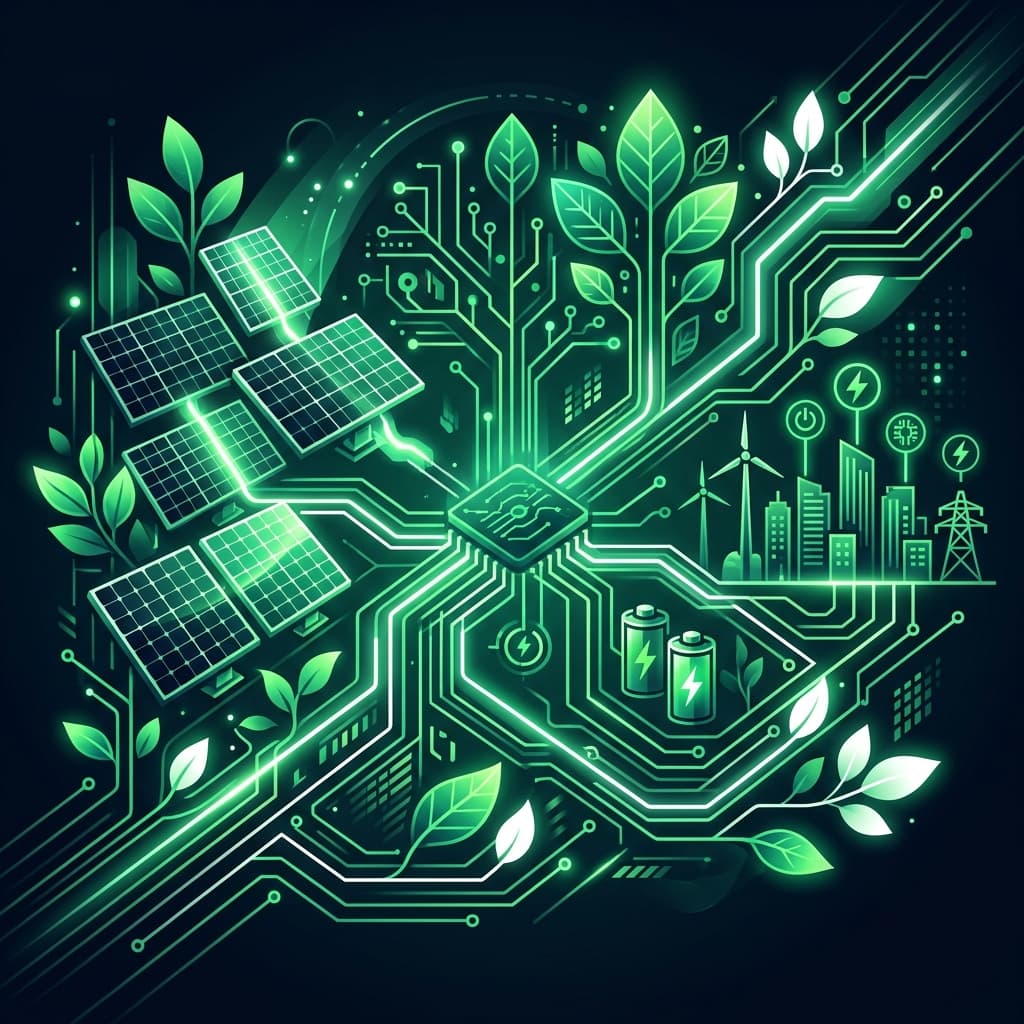
When we talk about "Green AI," it's not just about using renewable energy to power data centers. It’s about building algorithms that are natively lean. Neuromorphic computing, efficient chip architectures, and better model pruning techniques are proving that we don't need a supercomputer for every query.
Why This Matters for Builders
If you’re a developer or a builder, this shift is your next major opportunity. The developers who win in the next 18 months won't just be the ones building the smartest agents; they'll be the ones building the most efficient agents.
Efficiency allows for deployment in places we couldn't even consider before—remote research stations, offline industrial monitoring, and high-performance wearables.
The future of AI is inherently physical. It lives in the real world, and the real world has resource constraints. Designing for those constraints isn't a limitation; it's the ultimate creative challenge.
We need to stop thinking of efficiency as "less capability" and start thinking of it as "more portability." It’s time to start building smarter, not just bigger.