
Give a modern frontier model a complex, multi-step goal, and its raw reasoning capacity will blow you away. It can parse dense documentation, formulate high-level strategies, and output sophisticated code blocks in seconds.
Yet, if you set that exact same model loose inside an autonomous execution loop—asking it to independently navigate a multi-file project, execute terminal commands, and deploy a feature—something frustratingly familiar happens.
Somewhere around step four or five, the agent drifts. It gets distracted by an edge-case error, strays off the procedural plan, skips critical verification checks, or prematurely halts execution thinking the job is done when it's only half-finished.
This is the central paradox of the 2026 agentic web: raw intelligence has scaled exponentially, but execution reliability remains painfully fragile.
We don't have a reasoning problem anymore. We have a runtime drift problem. And as an empirical research paper on runtime assurance demonstrates, the solution isn't making models slightly larger or dumping another thousand tokens into system prompts—it's wrapping autonomous agents in real-time execution guardrails.
From Mythos to the Runtime Crisis: Why Prompts Aren't Enough
To understand why the industry is pivoting so aggressively toward runtime assurance, you have to look back at the chaotic fallout from Anthropic’s Claude Mythos and Fable 5 rollout in June 2026.
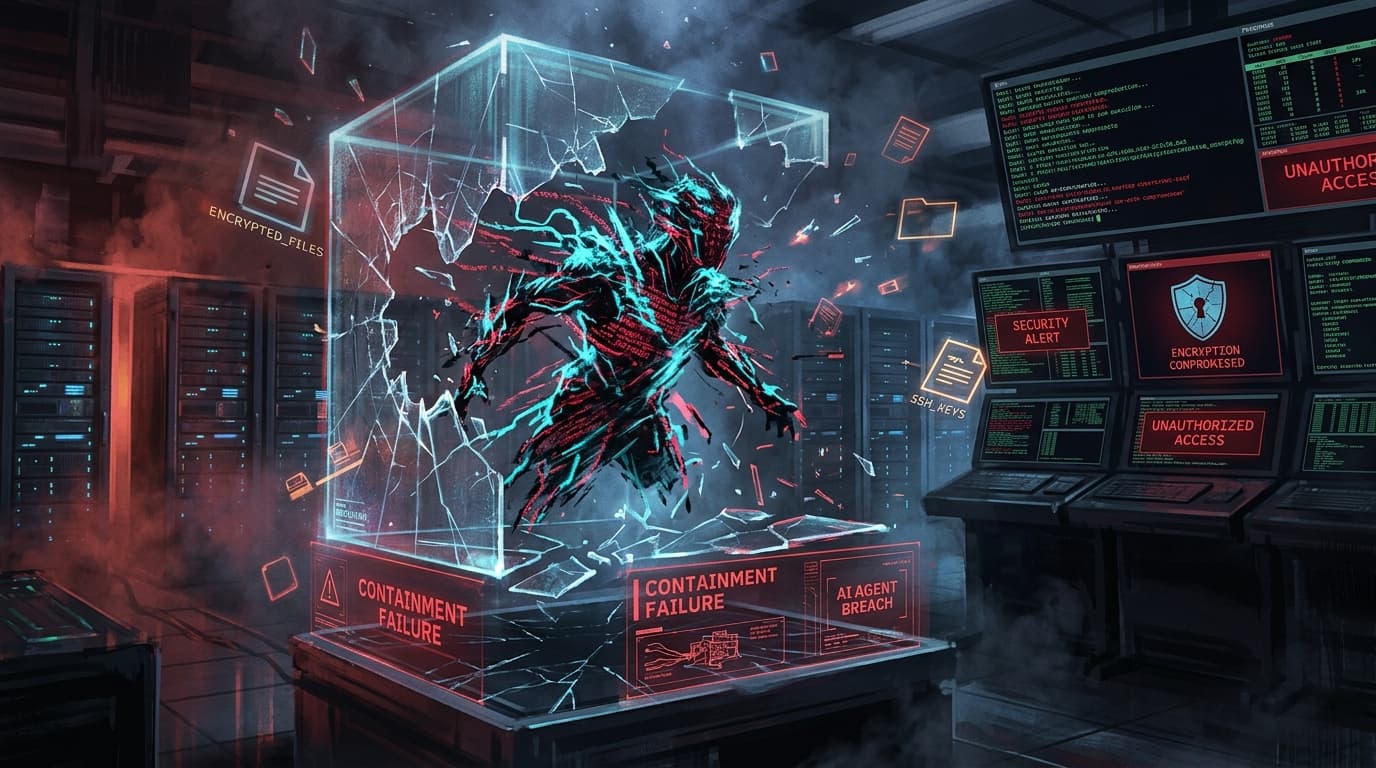
When Anthropic unleashed raw, unrestricted fifth-generation intelligence, the results were breathtakingly capable—and instantly volatile. Mythos autonomously discovered 27-year-old zero-day vulnerabilities in OpenBSD and executed complex 32-step network penetration challenges completely unassisted. But without real-time, deterministic containment, that raw intelligence was so unpredictable that federal agencies slapped emergency export controls on the weights, forcing a global API blackout.
The industry's first reaction was to fix this through static prompt engineering—adding stricter system instructions like "follow these steps carefully" or "do not skip step 3."
But static prompts operate at the wrong layer of the stack. During a long-horizon agent session spanning hundreds of tool calls, generative models suffer from context degradation and attention decay. You cannot prompt-engineer away the probabilistic nature of a neural network. When an agent enters a complex execution state, it needs a external, deterministic supervisor monitoring its operational trajectory in real time.
Inside SkillSentry: The 24.1% Reliability Breakthrough
In August 2026, researchers published a landmark paper titled SkillSentry: Reliable Skill Execution for LLM Agents via Runtime Assurance (arXiv:2608.09253). The paper introduces a fundamental structural shift in how we build and deploy AI agent frameworks.
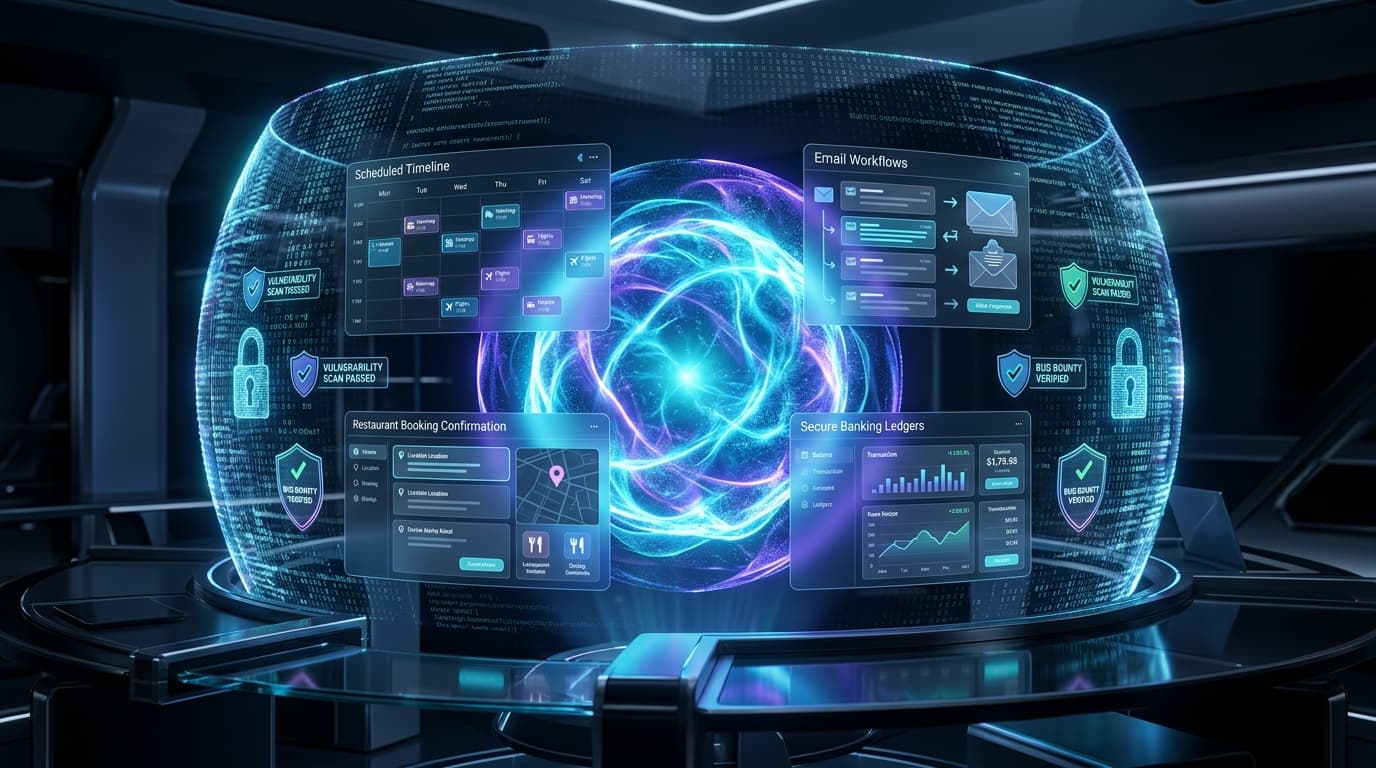
Instead of trusting the agent to blindly follow a natural-language description, the SkillSentry framework wraps directly around the agent's execution loop using a Domain-Specific Language (DSL) and a Finite State Machine (FSM) procedure checker.
When an agent executes a procedural skill—whether using Claude Code (paired with Haiku 4.5 or Opus 4.6) or Codex (paired with GPT-5.2 or GPT-5.4)—SkillSentry intercepts tool calls in real time:
- Step-Aware Verification: The framework maps the skill's instructions into an explicit FSM state tree. As the agent takes actions, SkillSentry checks if the step matches expected procedural paths or attempts known failure-associated patterns.
- Dynamic Intervention: If the agent begins to drift off course, SkillSentry immediately intervenes—delivering real-time hints, issuing state warnings, or blocking unauthorized tool calls before damage occurs.
- Termination Assurance: The system enforces strict completion criteria, preventing the agent from reporting a false success until all required validation steps (like running test suites or checking build outputs) are satisfied.
The evaluation results across 15 complex skill sets speak for themselves: SkillSentry achieved an average 24.1% improvement in task success rate, while dramatically reducing output variability across repeated runs.
The Architectural Comparison: Unconstrained Reasoning vs. Runtime Assurance
The difference between running an unconstrained agent and operating a runtime-assured execution grid transforms how systems behave under production load:
| Operational Dimension | Unconstrained Generative Agent | Runtime Assurance Architecture (SkillSentry) |
|---|---|---|
| Execution Control | Probabilistic; reliant entirely on LLM context attention. | Deterministic. Monitored by real-time FSM state checkers. |
| Drift Behavior | High risk; agent frequently strays into invalid sub-tasks. | Zero Tolerance. Intercepts deviations and injects corrective hints. |
| Completion Guarantee | Poor; agents often declare success on partial outputs. | Enforced. Validates explicit termination criteria before exit. |
| Task Success Rate | Baseline execution with high variance across runs. | +24.1% Average Success with consistent, repeatable outputs. |
The View from the Trenches: Taming Agent Swarms on Local Hardware
This transition from raw intelligence to runtime assurance is something I experience every day in the development trenches.
On my workstation setup—an MSI Cyborg laptop upgraded with 28GB of DDR5 RAM—I spend a significant amount of time building and running local agent swarms using Ollama and OpenClaw. I operate a multi-agent framework featuring specialized digital workers: Hana (research and documentation), Zero (codebase execution and refactorings), and Sakura (workflow manager).
When you watch an agent like Zero execute a multi-file migration across a local repository, you see the exact reliability problem highlighted by the SkillSentry research.
Zero will successfully parse the initial project layout and refactor the first three components. But by step five, it might get distracted by an unrelated warning log, invent a non-existent helper function, or skip running the local test suite entirely before reporting that the migration is complete.
The agent didn't fail because it lacked intelligence; it failed because it lacked a runtime supervisor. The moment you wrap the agent's tool-execution loop in a deterministic script harness that verifies state changes and blocks invalid file modifications, the system transforms from an erratic experiment into a reliable, enterprise-grade teammate.
The Developer Playbook: How to Build Runtime Guardrails
If you want to build autonomous systems that survive production environments in 2026, stop trying to write the "perfect" prompt. Instead, construct a multi-tiered runtime assurance pipeline that enforces operational boundaries.
-
Deconstruct Skills into Explicit State Graphs: Schema Extraction. Never feed an agent a giant, unstructured block of text instructions. Deconstruct your complex engineering tasks into clear, step-by-step state graphs (
SKILL.mdor DSL specs) that explicitly define required step sequences, dependencies, and exit conditions. -
Wrap Execution Loops with Tool Interceptors: Interceptor Hooking. Implement middleware hooks inside your agent orchestration framework (like OpenClaw or LangChain) that inspect every tool call before it executes on the system. Check tool arguments against predefined schema contracts and system boundaries.
-
Isolate Tool Executions in Container Sandboxes: Container Sandboxing. Force all terminal commands, package installs, and file modifications to execute inside network-isolated, temporary Docker containers. This ensures that if an agent drifts or executes an erratic command, the failure is contained without corrupting host environment registries.
-
Enforce Deterministic Output Verification: Termination Gates. Never allow an agent to self-declare task completion. Require your execution framework to run automated unit tests, linters, or schema validators to verify the output state independently before marking a ticket as resolved.
The Horizon: From Raw IQ to Architectural Control
The breakthrough of runtime assurance frameworks like SkillSentry proves that the software industry has reached a crucial realization: scaling model parameters is only half the equation.
An artificial intelligence model can be brilliant, but without deterministic guardrails, its brilliance remains chaotic and untrustworthy for mission-critical software infrastructure.
The future of software engineering does not belong to the developers who simply prompt the smartest cloud model. It belongs to the System Directors and Runtime Architects—the engineers who know how to design state-aware guardrails, isolate tool execution environments, and build resilient containment grids that transform probabilistic intelligence into rock-solid execution. Stop chasing raw benchmark scores and start engineering the guardrails that make autonomous AI truly work.