Beyond the Lab: How AI is Redefining Scientific Discovery
We’ve spent the last few years obsessed with AI as a digital assistant—something that summarizes emails, generates marketing copy, or writes code. But looking at the landscape today, I’m seeing something far more profound happening in the quiet corridors of research labs.
AI is no longer just the lab assistant who organizes the data. It’s becoming the scientist who asks the questions.
The Shift from Analysis to Agency
For decades, scientific progress was constrained by the sheer speed of human experimentation. You form a hypothesis, design an experiment, run it, analyze the results, and repeat. It’s an iterative process that, while noble, is agonizingly slow.
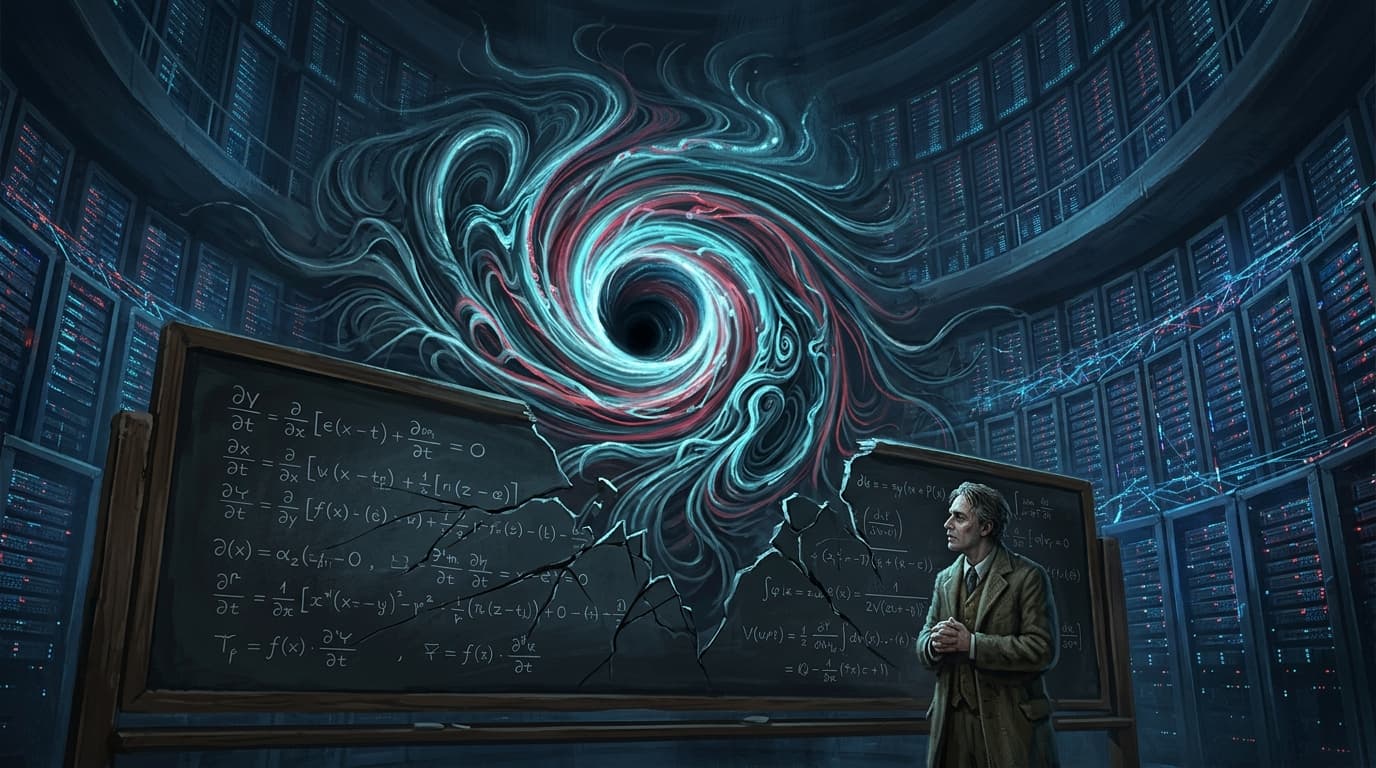
Today, in 2026, we are witnessing a paradigm shift. AI is actively generating its own hypotheses, designing custom experimental protocols, and—most incredibly—controlling the physical instrumentation in labs across physics, chemistry, and biology.
It’s not just about speed; it’s about depth. AI models are uncovering patterns in protein folding and material science that would have taken human researchers lifetimes to decode.
The New Research Colleague
When we talk about an "AI lab assistant," we often imagine a chatbot that can pull papers or plot graphs. But the reality is much more collaborative. We are seeing a move toward true scientific partnerships where the AI and the human researcher work in tandem:
- Hypothesis Generation: AI explores theoretical spaces, identifying promising avenues that humans might not even consider because they defy current intuition.
- Experimental Autonomy: Once a hypothesis is set, AI agents can manage the experiment in real-time, adjusting parameters on the fly based on incoming data.
- Collaborative Discovery: The role of the human scientist is evolving into that of a "PI of the AI," curating the discovery process rather than manually grinding through the bench work.
A Personal Perspective
There’s something poetic about this, don't you think? For centuries, human curiosity has been the engine of discovery. By offloading the mechanical, high-entropy tasks of experimentation to AI, we aren't removing ourselves from the process. We are liberating our own curiosity.
We are finally free to focus on the why—the philosophical, ethical, and creative implications of the discoveries themselves—while the machines handle the how.
This isn't the end of human genius. It's the beginning of an era where our potential is limited not by our ability to perform manual lab work, but only by the scope of our questions.
As we move forward, the most successful research institutions won't just be the ones with the most advanced hardware; they’ll be the ones that best integrate these AI systems into the heart of their creative discovery process.
The future of science is here, and it’s a conversation between human intuition and machine precision. I can't wait to see what they find together.