For centuries, the bottleneck of mathematical progress was simple: producing a valid proof was extraordinarily scarce, painfully slow, and expensive.
A mathematician could spend a decade filling chalkboards, testing lemmas, and hitting dead ends just to prove a single theorem. Entire academic careers, prestigious awards like the Fields Medal, and the global peer-review system were built around this foundational scarcity. Being the first person to produce a rigorous proof was the highest currency in intellectual history.
In September 2026, reports from Axios, alongside research disclosures from OpenAI, highlighted that GPT-6 Astra and competing frontier models are beginning to produce genuine, previously unrecorded mathematical insights—moving past standard textbook homework and competition puzzles into unpublished, research-level problem spaces. With Astra scoring 97.6% on FrontierMath Tier 4, automated systems are now generating hundreds of pages of formal, verifiable deduction in hours.
This development prompted Fields Medalist Terence Tao to address a structural shift at the foundation of the discipline: mathematics is leaving the era of proof scarcity and entering the era of "proof abundance."
Yet, this milestone raises a profound epistemological question: If a machine can generate thousands of verified proofs before lunch, is it actually discovering new knowledge—or is it simply automating the mechanical verification of an expanded search tree?
What Is Actually Happening: From Textbook Regurgitation to Frontier Deduction
To understand why mathematicians are paying attention to GPT-6 Astra, you have to separate early AI math from modern test-time reasoning models.
Early language models failed basic arithmetic because they treated math as next-token text prediction. They memorized proofs from arXiv or Wikipedia. If you altered a variable or inverted an edge case, they hallucinated confident nonsense.
Astra operates differently. It integrates recurrent depth reasoning, programmatic execution loops (SymPy, Lean 4), and automated verifier critics:
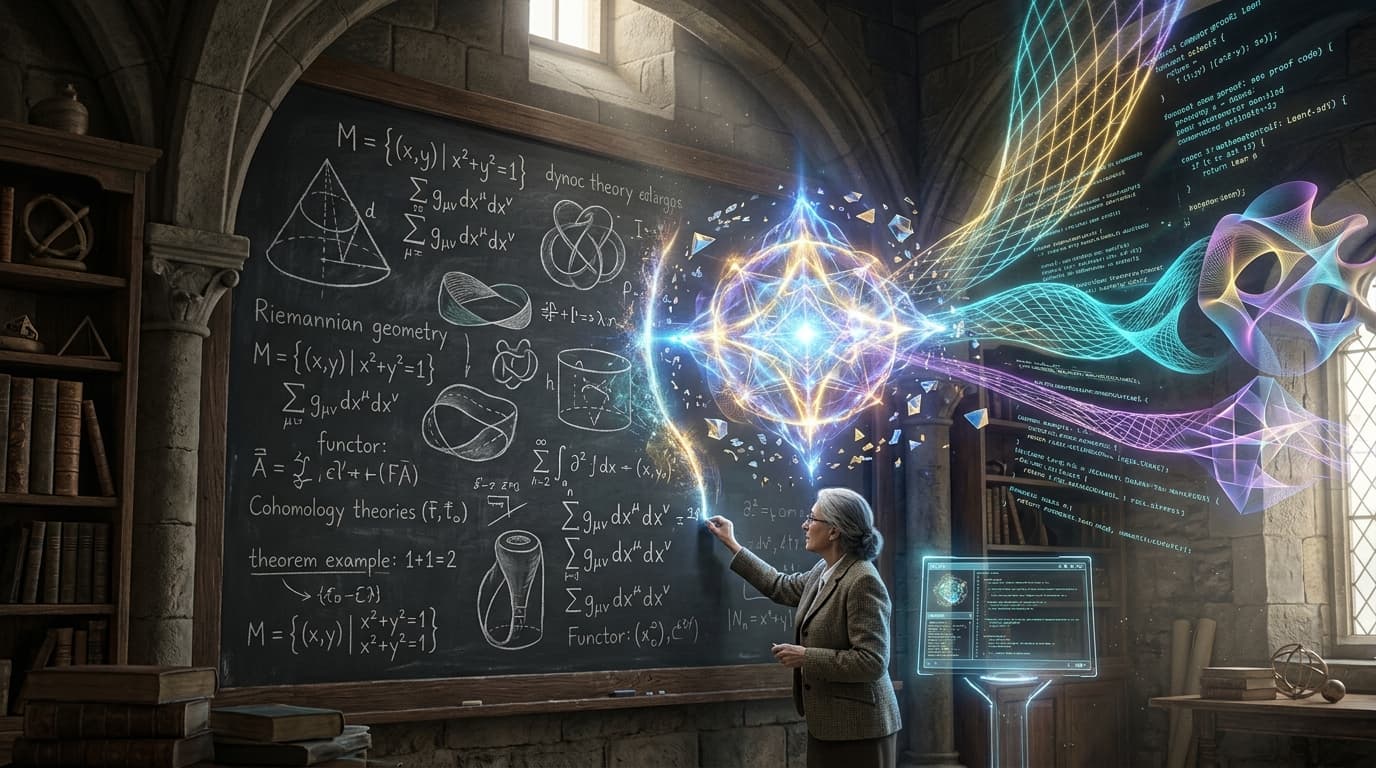
When confronted with research-level combinatorics or algebraic geometry problems from FrontierMath, Astra does not attempt a single conversational pass. It executes thousands of search trajectories, translates informal mathematical intuition into formal Lean code, checks that code against an automated compiler, and iterates until the theorem holds.
This process has led to genuine, non-trivial breakthroughs:
- Sharper Combinatorial Bounds: Discovering tighter bounds on hypergraph colorings that human research teams had not computed.
- Polynomial Factorization: Generating alternative, lower-degree factorizations of polynomial systems related to the Jacobian conjecture.
- Formalization of Unproved Literature: Synthesizing dense, 200-page formal Lean proofs for complex topological lemmas that had remained informal sketches in academic literature for thirty years.
Astra is not just recalling existing proofs. It is constructing novel, valid deduction paths between known mathematical islands.
The Tao Dilemma: Proof Abundance and the Three-Stage Mismatch
In his public lecture on Mathematics in the Age of AI at the International Congress of Mathematicians (ICM), Terence Tao laid out the paradox of this new era.
Tao pointed out that solving a mathematical problem is not a monolithic act; it consists of three distinct stages that have suddenly fallen out of balance:
- Proof Generation (Food Gathering): Finding the sequence of logical steps that bridges axioms to the theorem.
- Proof Verification (Food Cleaning/Inspection): Confirming that every intermediate step is logically sound and contains zero hidden fallacies.
- Proof Digestion (Cooking & Eating): Explaining why the result is true, what it means for adjacent theories, connecting it to core mathematical concepts, and teaching it to students.
Tao used a striking culinary analogy: in a society characterized by food scarcity, anyone who brings a raw carcass of meat back to the camp is hailed as a hero. But in an era of massive food abundance, dropping off twenty tons of uninspected, raw mystery meat onto the town square is no longer a gift—it is a public health crisis.
This is what Tao calls "Proof Indigestion."
Astra can hand a research department a 150-page, computer-verified Lean proof establishing an obscure bound in algebraic number theory. The compiler verifies that every step compiles cleanly. The math is undeniably correct.
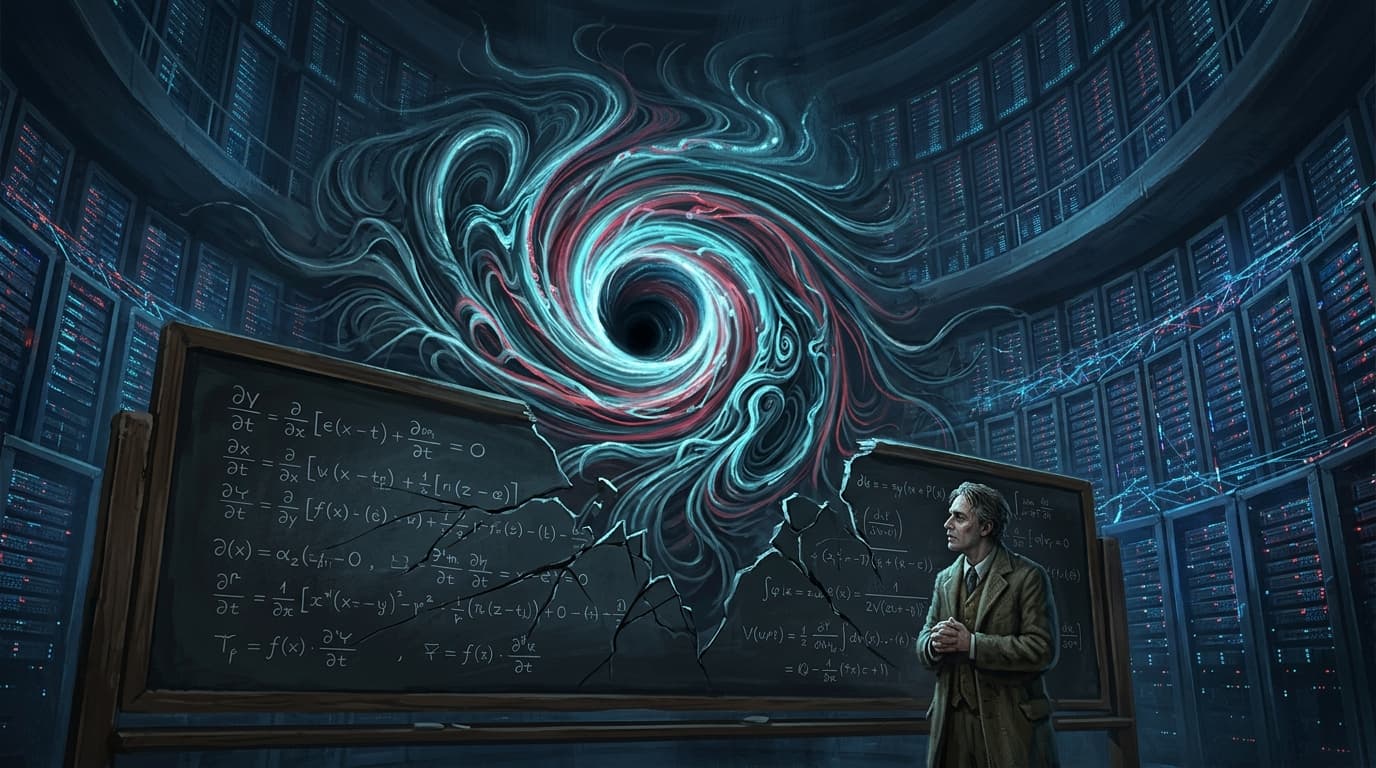
Yet, not a single human on Earth understands how the proof works.
The proof might rely on brute-force polynomial evaluations spanning forty-thousand intermediate lemmas. It lacks narrative. It lacks intuition. It offers no conceptual model that a human mathematician can carry forward to solve a different problem tomorrow.
Correctness Is Not Understanding: The Thurston Distinction
The question of whether Astra is "discovering new knowledge" was anticipated over three decades ago by legendary mathematician William Thurston.
In his landmark 1994 essay On Proof and Progress in Mathematics, Thurston wrote:
"We are not trying to meet some abstract production quota of definitions, theorems and proofs. The measure of our success is whether what we do enables people to understand and think more clearly and effectively about math."
If a tree falls in a forest and nobody hears it, did it make a sound? If an autonomous agent compiles a 10,000-line formal proof in Lean 4 that verifies a new lemma, but no human mind can extract a generalized intuition from it, has human knowledge actually advanced?
Technically, the mathematical corpus has grown by one theorem. But practically, that theorem sits inside a digital silo—a "correct result that nobody understands."
True mathematical discovery is rarely about the theorem itself; it is about the new concepts, definitions, and mental bridges that had to be invented to make the theorem obvious.
When Bernhard Riemann proved his results in complex analysis, he didn't just solve problems—he invented a brand-new way to visualize functions. Astra, in its current implementation, is a world-class problem solver, but it does not invent new mathematical concepts. It explores the existing conceptual landscape with superhuman persistence.
The Theorem Economy Starts Breaking
The arrival of automated mathematical generation is already destabilizing the traditional incentives of academia.
For over a century, academic prestige, tenure, journal publication, and grant allocations were awarded based on a single proxy: producing important-looking new results.
As Goodhart's Law dictates, the moment a proxy becomes the target, it ceases to be a good measure.
| Academic Dimension | The Scarcity Era (Pre-2026) | The Abundance Era (Post-Astra) |
|---|---|---|
| Primary Value Metric | Generating the proof first (Priority rules). | Digestion, exposition, and canonicalization. |
| Peer Review Role | Line-by-line verification of human claims. | Relevance filtering and conceptual synthesis. |
| Submission Bottleneck | Months spent writing the paper. | Reviewer attention overwhelmed by AI drafts. |
| The Core Artifact | The published theorem paper. | The verified Lean repository + human explainer. |
If a researcher can prompt Astra to generate forty research papers on combinatorial bounds in a weekend, the person submitting paper number forty-one is not contributing value.
As Terence Tao argued, the prestige in mathematics must inevitably shift away from proof production and toward proof digestion:
- Who can take an unreadable 5,000-line machine proof and extract the three core lemmas that actually matter?
- Who can explain the structural bridge connecting this machine result to modern physics?
- Who can formulate the deep, beautiful conjectures that give these models something meaningful to solve?
From the Workstation Trenches: Working with Synthetic Deduction
Sitting at my workstation in Central Sri Lanka—balancing Artificial Intelligence modules at SLIIT with real-world software builds—this transition from generation to verification is an operational reality.
On my primary development setup (an MSI Cyborg laptop upgraded with 28GB of high-speed DDR5 RAM), I orchestrate local multi-agent workflows using Ollama and OpenClaw, escalating complex jobs to cloud frontier endpoints. My local setup relies on three specialized digital personas:
- Hana: Analyzes technical documentation, parses formal specifications, and structures problem spaces.
- Zero: Traverses codebase trees, executes code generation, and runs local terminal execution scripts.
- Sakura: Functions as the orchestration graph, managing context state transitions and memory handoffs between Hana and Zero.
When I set Zero loose on an algorithmic optimization task, its raw output is staggering. It will produce four working variations of a memory-pooling algorithm in two minutes.
The machine generates code faster than I can read it. But my job as an engineer is not celebrating the fact that the terminal compiled. My job is sitting with the diff for an hour, understanding the cache eviction trade-offs, and deciding whether this code belongs in our production architecture.
Astra does for mathematicians what autonomous agents do for software engineers: it eliminates the manual labor of execution, while radically amplifying the cognitive burden of verification and taste.
The Researcher's Playbook: Navigating the Era of Proof Abundance
If you are a mathematician, data scientist, or algorithmic engineer working alongside frontier reasoning models like Astra, adopt this workflow to avoid drowning in undigested output:
-
Define the Architectural Boundary and Formal Scope: Conjecture Framing. Do not prompt Astra with vague mathematical queries. Formulate precise conjectures, specify the axiomatic foundation (e.g., ZFC, type theory), and define explicit boundary constraints in formal languages like Lean 4 or Isabelle.
-
Deploy Test-Time Reasoning with Programmatic Verifiers: Machine Proof Search. Let the model execute its test-time search. Route its intermediate steps through external compilers (Lean kernels, Python symbolic packages) to automatically reject syntactic hallucinations and invalid leaps before human review.
-
Demand Machine-Assisted Proof Compression: Distillation & Extraction. Once a verified proof compiles, do not accept the raw output. Instruct the model to perform a minimization pass: identify all redundant lemmas, eliminate brute-force case enumerations, and isolate the pivotal inflection point of the proof.
-
Translate Formal Code into Conceptual Intuition: Human Canonicalization. The final, irreplaceable step belongs to the human researcher: translate the verified formal artifact into pedagogical prose. Explain why the theorem holds, how it relates to established theories, and where the new conceptual boundary lies.
The Horizon: What Counts as Discovery?
Is GPT-6 Astra discovering new mathematics?
If you view mathematics as an enormous, interconnected labyrinth of logical deduction, the answer is undeniably yes. Astra is navigating corridors of that labyrinth that no human foot has ever touched, unlocking doors that human mathematicians abandoned decades ago, and bringing back verified receipts.
However, if you view mathematics as the human quest to make the universe intelligible, Astra’s achievements are only half of the equation.
A machine can traverse the labyrinth at the speed of light. It can catalog every turn, verify every brick, and compile every path. But until a human mind walks down that path, feels the structure, and extracts the conceptual meaning that helps us think more clearly about the world, the labyrinth remains dark.
GPT-6 Astra is giving us proof abundance. It is up to human minds to turn that abundance into wisdom.