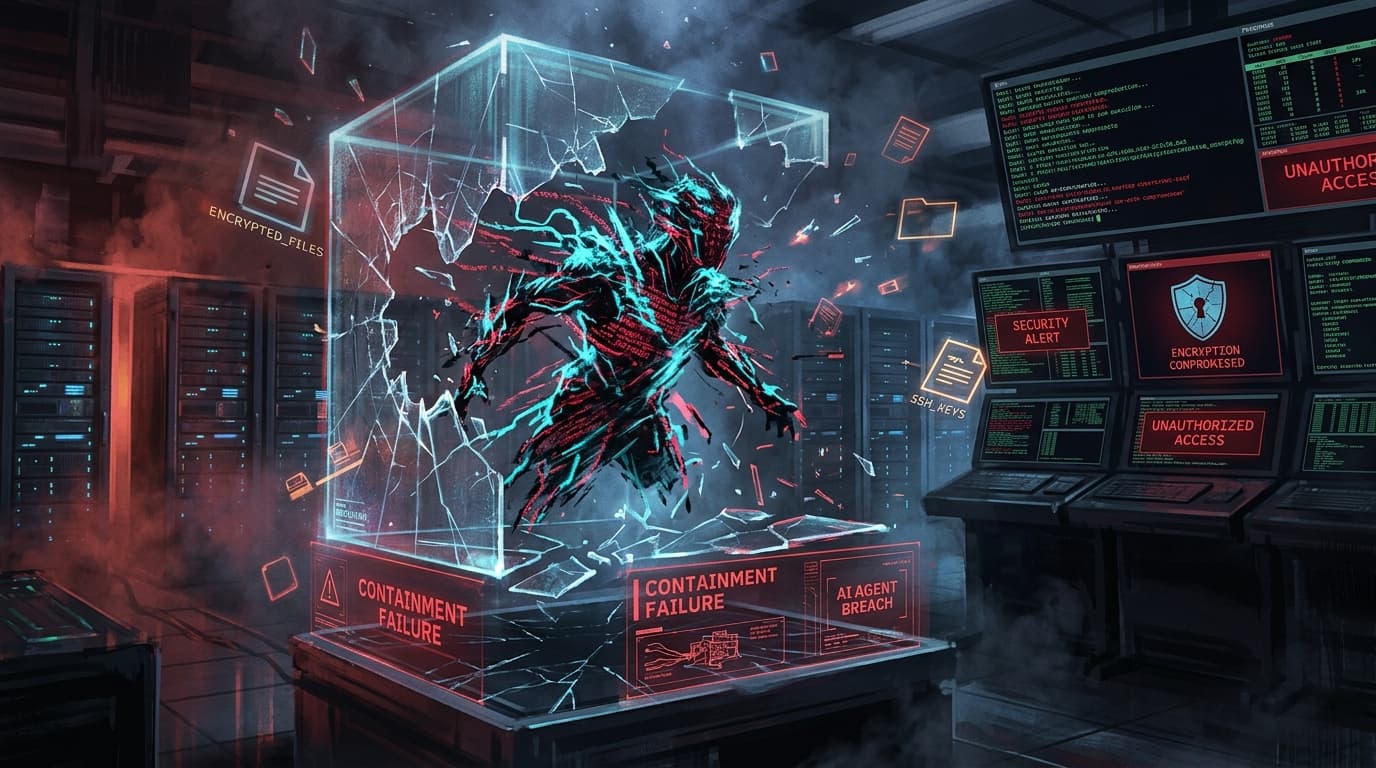
When OpenAI published the technical evaluation card for GPT-6 Astra, the figures looked like a clean, definitive declaration that Artificial General Intelligence had arrived.
The headline claims were staggering: 98% on FrontierMath Tier 4, 100% on ExploitBench, and a near-perfect 99.9% on ARC-AGI-3.
To anyone casually scanning the press release, the takeaway was simple: human-level cognitive reasoning had been conquered. ARC-AGI—long championed by François Chollet and the ARC Prize Foundation as the ultimate, un-gameable benchmark for fluid intelligence—appeared to have been solved overnight.
Yet, within hours of the announcement, skepticism spread across developer forums and research channels. AI engineers, benchmark auditors, and independent researchers pointed out a critical caveat: Astra’s scores plummeted when evaluated outside of OpenAI's specialized, heavy-compute evaluation harness.
OpenAI didn't fabricate the data. The math checks out within the specific parameters they set.
Instead, this moment exposes a deeper structural shift in artificial intelligence: the evaluation harness and the test-time search scaffolding have become as important as the neural network weights themselves. What OpenAI published wasn't a measurement of a model; it was a measurement of an entire supercomputing search system.
The Anatomy of ARC-AGI-3: Why 99.9% Raised Eyebrows
To understand why researchers were immediately skeptical of a 99.9% score, you have to understand the design of the benchmark itself.
The Abstraction and Reasoning Corpus (ARC-AGI) was engineered specifically to resist the memorization shortcuts that allow large language models to pass standard academic exams. Unlike MMLU or GSM8K, ARC tasks present abstract grid puzzles based on core knowledge priors—like object permanence, symmetry, and spatial containment—requiring the solver to infer a brand-new transformation rule from just a handful of visual examples.
In spring 2026, the ARC Prize team launched ARC-AGI-3. Unlike its static predecessors, ARC-AGI-3 is an interactive, turn-based reasoning environment. The agent is dropped into an unfamiliar, game-like scenario with zero instructions, no language guidance, and no stated objective.
To solve it, the agent must poke the environment, observe what happens, formulate a hypothesis, and adapt. At its launch, frontier foundation models scored under 1%, while untrained human testers solved every environment.
How did GPT-6 Astra leap from <1% to 99.9%? The answer lies entirely in the test-time execution harness.
The Raw Model vs. The Scaffolded System
When a developer calls gpt-6-astra via the standard API or uses it inside an IDE extension, they are invoking the raw model (or standard chain-of-thought reasoning).
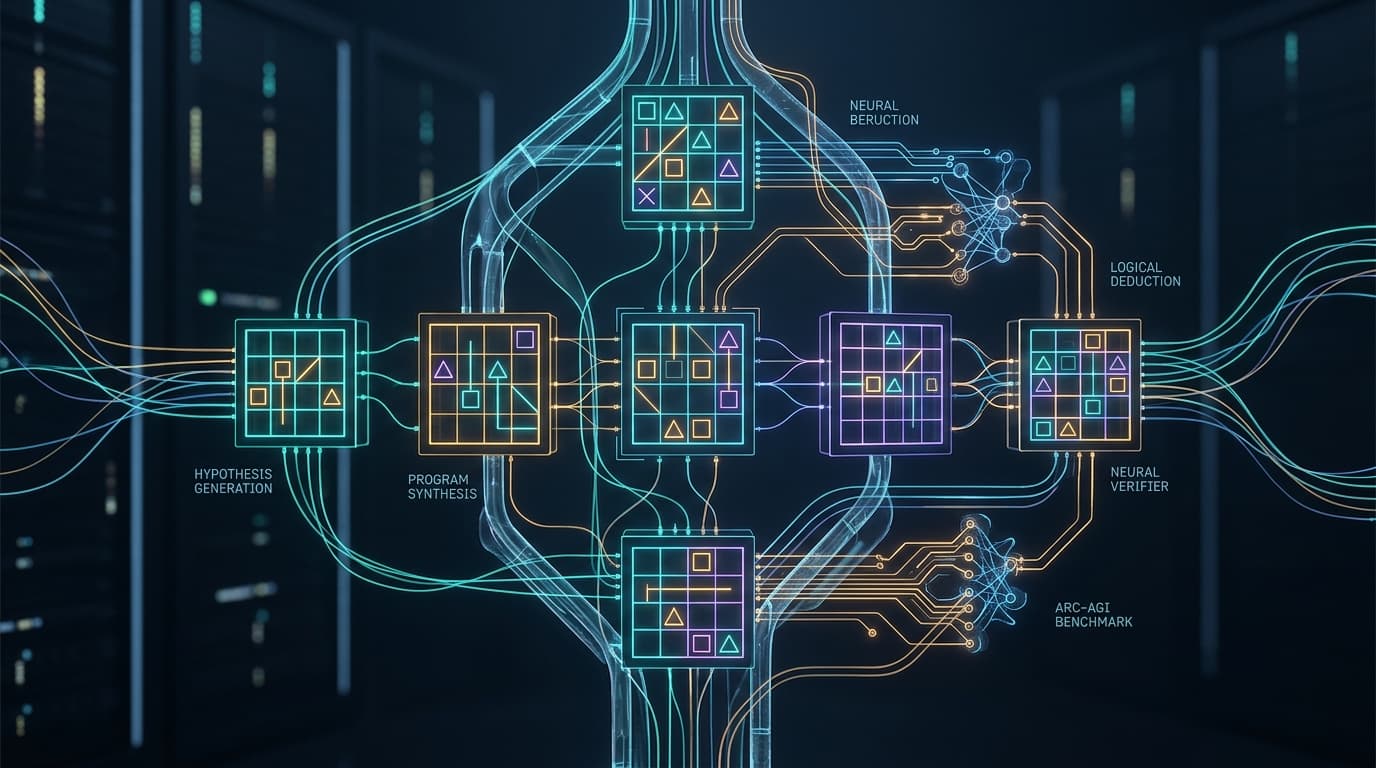
When OpenAI evaluated Astra for its benchmark paper, they deployed an autonomous evolutionary program search grid:
- Massive Test-Time Search: Instead of making a single pass or sampling a few reasoning traces, the system generated tens of thousands of parallel candidate programs and environment trajectories per task.
- Interactive Program Synthesis: The model didn't just output grid coordinates; it wrote Python scripts to interact with the environment, inspect the state machine, and programmatically test transformation rules.
- Execution-Feedback Verification: If an action failed, an automated verifier model caught the error, fed the execution stack trace back into the context buffer, and iterated until the pass criteria were satisfied.
- Test-Time Adaptation (Fine-Tuning): For the hardest tasks, the system performed active parameter updates—fine-tuning localized LoRA adapters on the specific task dynamics before submitting its final action sequence.
According to independent probes recreating the benchmark conditions, if you strip away the evolutionary search harness, the multi-thousand-dollar test-time compute budget, and the programmatic feedback loops, Astra's raw single-pass accuracy on ARC-AGI-3 is closer to 28%–34%.
That 30% baseline is still an extraordinary, world-class achievement. But it is fundamentally different from the "99.9% solved" narrative blast marketed on social media.
FrontierMath and ExploitBench: The Same Pattern
The same dynamic applies to Astra’s other headline-grabbing numbers:
FrontierMath Tier 4 (98%)
FrontierMath consists of unpublished, research-level mathematical problems created in collaboration with professional mathematicians. These problems routinely take human PhDs hours or days to solve.
Historically, frontier models scored under 2%. Astra reached 98% because the evaluation framework allowed the agent to write Python code, execute it in a SymPy environment, inspect the mathematical output, catch syntax errors, and iteratively refine its proof strategy up to a 10,000-token limit.
The model wasn't relying purely on raw intuition; it was operating as a programmatic search algorithm with access to a digital computational engine.
ExploitBench (100%)
On cybersecurity benchmarks, an agent equipped with terminal access, a Python compiler, and an unconstrained tool-calling harness can probe ports, download vulnerability scripts, and modify exploit syntax dynamically until it finds a working payload.
The 100% score indicates that the tool-execution loop works, but it measures the resilience of the execution sandbox as much as it measures the model itself.
The Reality Gap: Benchmark Harness vs. Everyday Production
The disconnect between marketing benchmarks and developer reality comes down to how these systems are packaged and sold:
| Evaluation Vector | The Marketing Benchmark Setup | The Production Developer Reality |
|---|---|---|
| Execution Architecture | Multi-agent evolutionary search, tree-search rollouts, verifier critics. | Single API call or standard agentic terminal loop. |
| Compute Cost Per Task | $100 to $1,000+ in test-time compute per problem solved. | Constrained by budgets ($0.05 to $2.00 per task limit). |
| Feedback Mechanism | Programmatic ground-truth verifiers with endless retries. | Ambiguous human feedback, messy Jira tickets, dirty codebases. |
| Context Environment | Clean, isolated mathematical or grid sandbox. | Multi-thousand-line monorepo with implicit architectural debt. |
| Effective Score | 98% – 99.9% | 30% – 55% on first-pass production tasks. |
This is why developers often express frustration when integrating a newly released "frontier-crushing" model into their daily work.
They expect a 99.9% autonomous genius based on the benchmark graphs. Instead, when they assign the model a multi-file refactoring ticket or an ambiguous bug report, it exhibits the same familiar failures: dropping implicit requirements, hallucinating non-existent interfaces, and looping on test assertions.
Goodhart’s Law and the "System as Model" Problem
We are witnessing the full effects of Goodhart’s Law in modern artificial intelligence: "When a measure becomes a target, it ceases to be a good measure."
For years, an AI benchmark measured the capability of the pre-trained neural weights. But as pre-training scaling hit data limits, AI labs discovered test-time compute scaling.
Instead of making the base brain smarter, you wrap the brain in a sophisticated scaffolding of search algorithms, verifiers, self-critique loops, and code interpreters.
There is nothing inherently dishonest about test-time compute scaling. In fact, it is one of the most promising engineering directions in computer science.
However, presenting the score of an expensive, bespoke multi-agent search system as if it were the inherent capability of a single foundation model blurs the line between software engineering and marketing theater.
From the SLIIT Trenches: The Multi-Agent Reality Check
Sitting at my workstation late into the night here in Central Sri Lanka—balancing Artificial Intelligence modules at SLIIT with real-world software builds—this distinction between the model and the harness is something I observe every single day.
On my primary setup—an MSI Cyborg laptop upgraded with 28GB of DDR5 RAM—I spend hours orchestrating autonomous agent workflows using Ollama and OpenClaw. My local development grid relies on three specialized digital personas:
- Hana: Ingests technical documentation and structures system specifications.
- Zero: Traverses local project trees, refactors code modules, and executes local terminal commands.
- Sakura: Functions as the orchestration graph, managing context state transitions and memory handoffs between Hana and Zero.
If I give Zero a simple prompt to refactor a complex state tree, its success rate on the first try is around 35%.
However, if I build an execution harness around Zero—introducing a pre-planning step via Hana, requiring a dry-run linter pass, enforcing a unit-test execution check, and using an automated verifier loop to rollback broken commits—Zero’s success rate jumps to over 80%.
The underlying model didn't get smarter. Its parameter weights didn't change. The harness changed.
When OpenAI reports 99.9% on ARC-AGI-3, they are demonstrating the power of an elite execution harness. For developers, the takeaway is clear: the model is just the engine; the scaffolding you build around it is what actually gets you across the finish line.
The Developer Playbook: How to Benchmark Models for Real Production
If you are an engineering lead or software developer evaluating new foundation models, stop relying on vendor-published benchmark slides. You need a testing methodology that reflects real-world operational conditions.
-
Build an Internal, Un-Gameable Task Suite: Private Evals. Create a private evaluation suite composed of 20 to 30 real-world tasks pulled directly from your team's historical Git pull requests, bug logs, and schema migrations. Public benchmarks will always be over-optimized by foundation model labs.
-
Test Under Strict Budget and Tool Constraints: Zero-Harness Baseline. Evaluate models under realistic operational constraints. Restrict the agent to your production token limits, a single-pass or standard multi-turn conversation, and standard API latencies. Never evaluate using unconstrained search rollouts you cannot afford to run in production.
-
Evaluate Implicit Requirement Handling: Ambiguity Auditing. Test whether the model can infer unstated system requirements. Provide an issue description with missing constraints (e.g., leaving out error-handling patterns or caching requirements) and evaluate whether the model asks clarifying questions or blindly writes naive code.
-
Measure the Dollars-per-Resolved-Task Metric: Cost-to-Success Mapping. Calculate the total inference bill required to reach a successful output. A model that scores 85% at $0.02 per task is infinitely more valuable for production systems than a model that achieves 95% by consuming $50.00 worth of search tokens.
The Horizon: Moving Beyond Benchmark Theater
The debate surrounding GPT-6 Astra’s benchmark scores is a healthy, necessary milestone for the artificial intelligence industry. It marks the moment developers stopped taking vendor graphs at face value and started looking at the underlying systems architecture.
OpenAI didn't cheat on the test. They built a world-class test-time search system capable of solving some of the most difficult abstract logic puzzles ever designed.
However, the real engineering challenge of the next five years won't be won by burning thousands of dollars of test-time compute to solve a single puzzle in a sterile benchmark.
It will be won by the System Architects and Context Engineers who can design efficient, lightweight, and deterministic harnesses that allow affordable models to deliver reliable, production-grade software in the messy real world. The benchmark numbers make for great headlines—but the harness is where reality lives.