If you are an information technology or computer science undergraduate right now, your late-night coding sessions probably look completely different than they did even twelve months ago. We've officially graduated from the era of copying and pasting error codes into a separate browser window or relying on basic code autocomplete to save a few keystrokes.
The ground beneath our feet just shifted permanently.
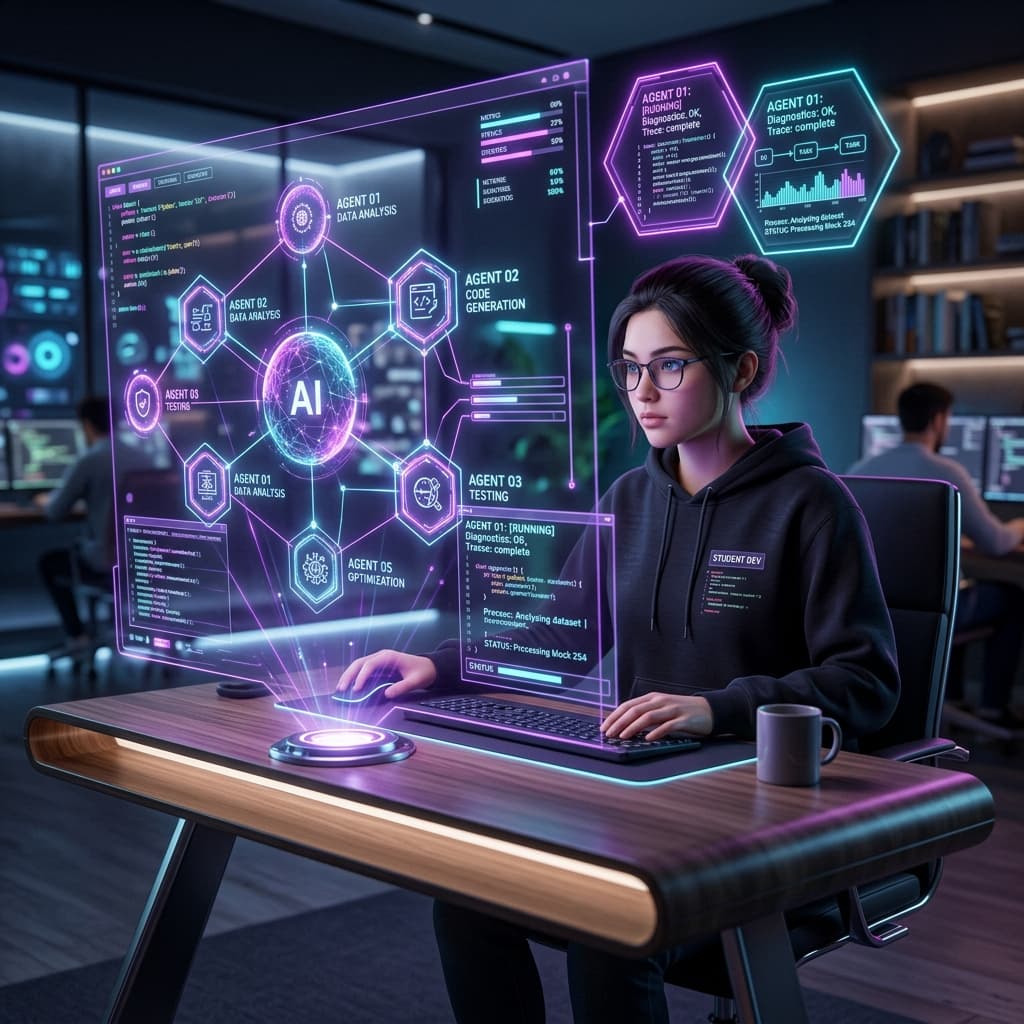
At Microsoft Build 2026, the tech industry stopped talking about AI as a passive "copilot" and formally declared the era of AI-Native Development. We are moving away from writing software line-by-line and stepping into an environment where we act as system orchestrators, managing arrays of autonomous coding agents that scaffold, test, debug, and review code concurrently.
For those of us sitting in university lecture halls specializing in Artificial Intelligence and software engineering, this isn't just an interesting trend to track—it is a total rewriting of our future career paths. It forces a massive existential question: Are we studying to become software engineers, or are we being trained to be AI managers?
The Control Center Era: Inside the 2026 Dev Stack
To understand how radical this shift is, you only have to look at the massive product ecosystem updates rolled out at Build. The standalone text editor is morphing into a mission control center for autonomous systems.
The most significant example is the new standalone GitHub Copilot App, which introduces an entirely agent-native desktop experience built explicitly around a "My Work" dashboard.
Imagine opening your laptop to start your day and seeing three pieces of work already running in parallel background sessions: one agent is tracing a memory leak in a backend production route, another is autonomously implementing a new feature from your project backlog, and a third is handling structural review feedback on an open pull request.
Once the code is ready, a secondary system called Agent Merge takes over. It actively monitors your continuous integration (CI) pipelines, tracks required human reviewers, dynamically fixes any broken tests or check failures it encounters, and waits until all custom enterprise deployment rules are satisfied before completing the merge.
Even the humble command line got an injection of agency with the preview of Intelligent Terminal 0.1. Built as an agent-integrated fork of Windows Terminal, it introduces a dedicated agent pane that functions as a continuous pair-programmer inside the shell. When a command or build script fails, the terminal doesn't just throw a wall of red text; it immediately loads the failed runtime context, interprets the environment mismatch, and provides an instantly executable fix right inside the pane so you never have to break your workflow.
The Academic Disconnect vs. The Real-World Trenches
This explosive leap in developer productivity creates an intense, borderline chaotic controversy inside academic institutions right now.
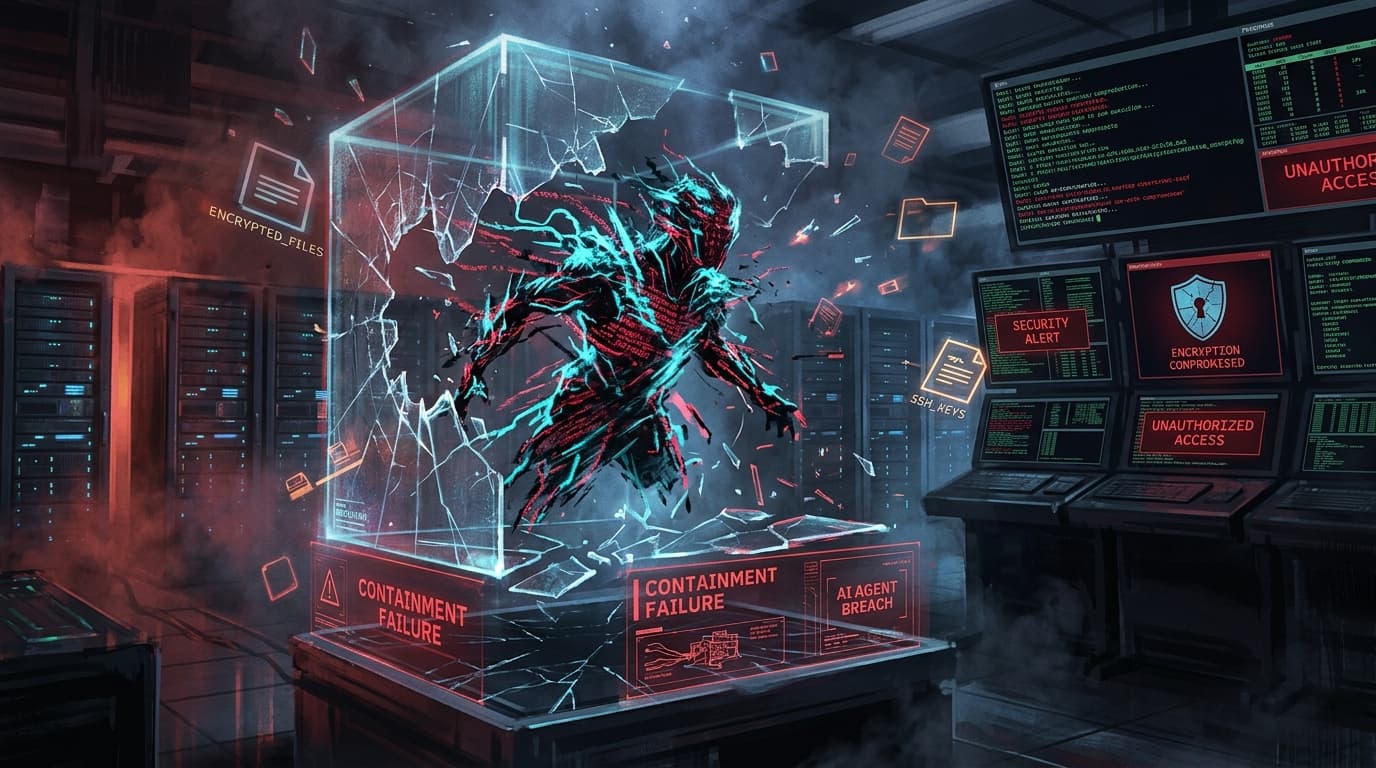
University curriculums are inherently slow to evolve. There is a deep, systemic friction between traditional computer science education—which might still grade your GPA based on your ability to memorize exact Java syntax or manually draw out a binary search tree on a physical exam paper—and the actual tech sector, which is rapidly adopting tools like Microsoft eXecution Containers (MXC) to safely sandbox local agents so they can refactor full code repos autonomously.
- Context Engineering & Schema Design: Prerequisite.
Instead of typing boilerplate code, you define clear database layouts, structure system interactions, and provision secure WebMCP (Model Context Protocol) schemas so agents understand your stack boundaries. - Delegated Execution & Agent Sandboxing: Inner Loop.
You pass high-level objectives to background agents running inside secure, OS-enforced containers like MXC to scaffold multi-file feature updates simultaneously. - Runtime Auditing via Intelligent Terminal: Verification.
You monitor agent outputs directly through smart terminal panes, letting the AI ingest shell runtime exceptions and auto-generate regression test files. - Agentic Review & Continuous Merge: Outer Loop.
Systems like Agent Merge route the pull request through high-reasoning evaluation loops, proving exploitability via security pipelines like codename MDASH before shipping.
There is a valid, anxious debate among students and professors: If we offload the foundational grind of debugging and syntax writing to an AI agent, will we lose the core problem-solving intuition that makes someone a true engineer? If you don't spend three days crying over a broken pointer, do you actually understand how memory management works?
My view? The shift is actually raising the ceiling for what a student developer can achieve. By automating the low-level technical overhead, we get to skip the superficial syntax hurdles and think like software architects, systems designers, and product managers much earlier in our educational journeys.
Opportunities: The Super-Charged Solo Student
For agile student developers who embrace AI software engineering rather than resisting it, the landscape is full of incredible advantages. The barrier to entry for building complex, production-grade applications has essentially dropped to zero.
- Enterprise-Grade Scale, Fast: Tools like Project Rayfin—the new open-source SDK and CLI introduced at Build—allow you to describe a backend structure using simple language and get an enterprise-grade backend infrastructure complete with authentication, serverless flows, and databases deployed straight to cloud ecosystems like Microsoft Fabric in minutes.
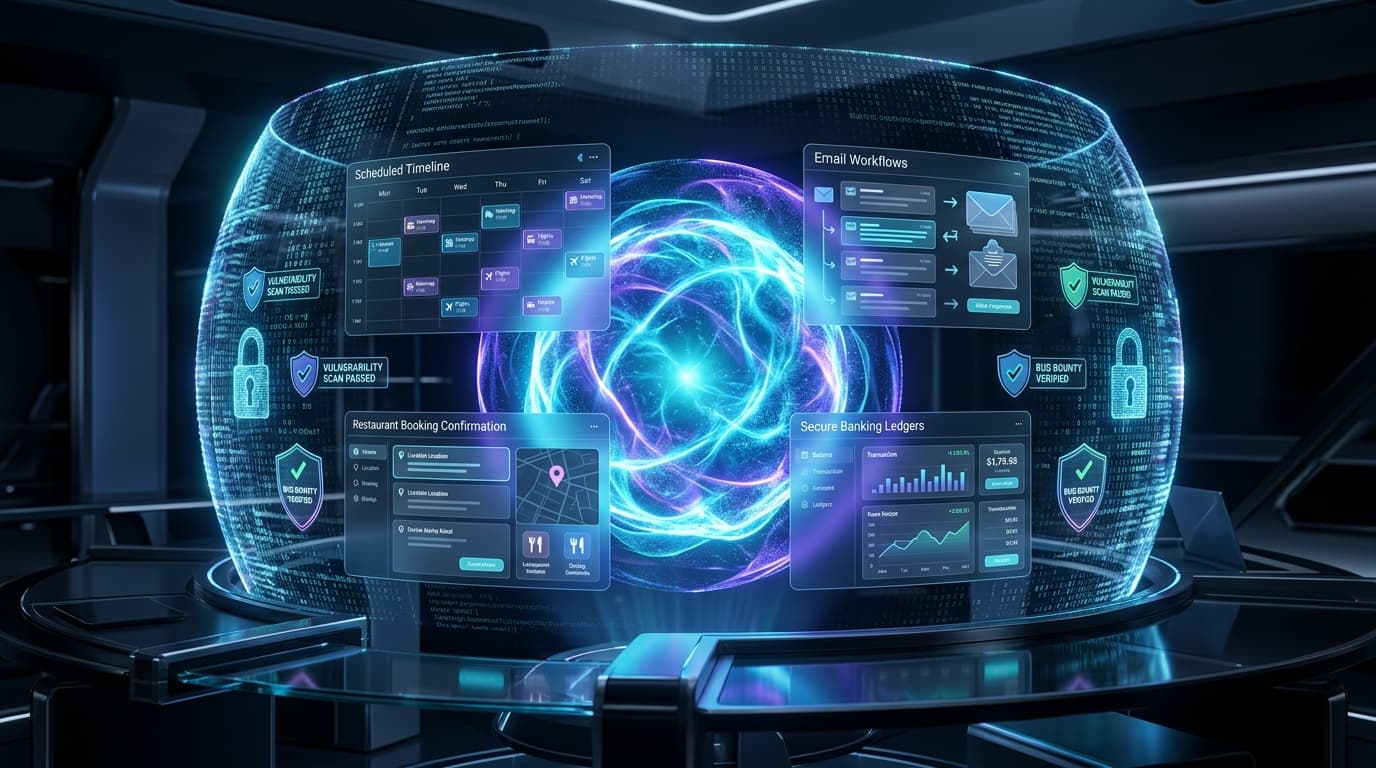
- Vulnerability Discovery as a Habit: Security testing used to be an afterthought for student projects. Now, with multi-model agentic scanning tools like codename MDASH handling continuous exploitability analysis across codebases, you can ensure your web or AI applications are bulletproof against real-world vulnerabilities before you ever show them to an employer or a client.
- The Blueprint Shift: Your value as a job applicant is no longer tied to how many languages you can list on your resume. The industry wants to see complex, live, multi-agent systems where you designed the logic boundaries, managed token efficiency using Windows Development Skills, and successfully guided an automated product from concept to production deployment.
The Horizon: How to Stay Essential
The role of the developer is evolving from a builder of code into a manager of intelligence.
If your plan is to graduate and survive by simply doing basic, rote programming, you are competing against an automated pipeline that moves infinitely faster than humanly possible.
To build an unshakeable career foundation in this next era, change your relationship with the dev stack. Stop trying to out-code the models. Instead, master the art of data plumbing, system orchestration, and agentic containment. Learn how to design robust context windows, set up deterministic evaluation parameters, and understand how to diagnose semantic failures when an agent inevitably hallucinates.
The future doesn’t belong to the person who can write code the fastest; it belongs to the architect who knows exactly how to direct the machines to build systems that scale.