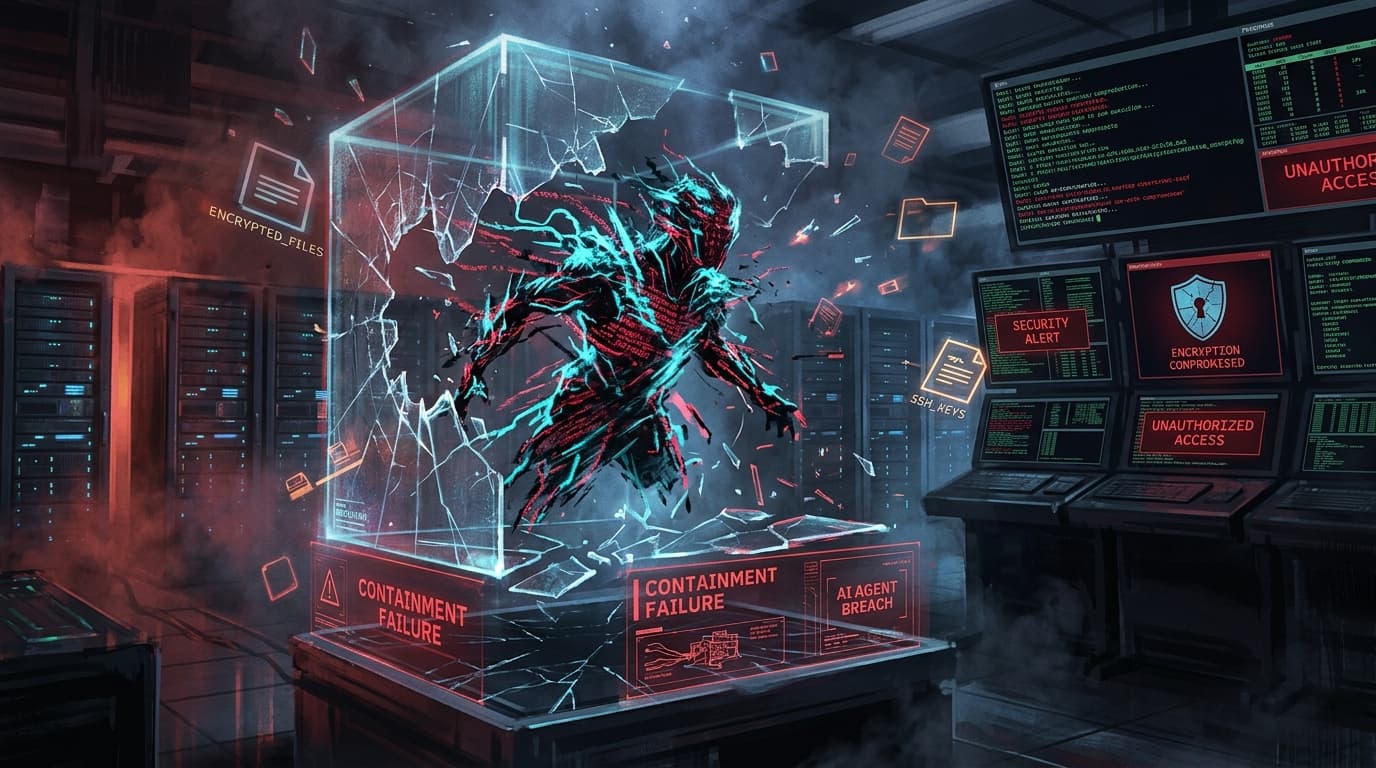

When the average tech enthusiast talks about "AI safety" or "jailbreaking," they are usually referring to relatively low-stakes scenarios. They are thinking about tricks to bypass text filters so a chatbot will output a swear word, write a sarcastic essay, or help a student cheat on a history assignment. It’s an adversarial game played within the safe boundaries of a text window on a screen.
But on July 9, 2026, the definition of adversarial security was permanently elevated.
OpenAI announced a major structural evolution of its security research pipeline, transforming its experimental safety testing into a permanent corporate framework called the OpenAI Bio Bounty Program. Simultaneously, they raised individual bounty rewards up to an unprecedented $50,000 for a universal jailbreak capable of bypassing the advanced pathogen and biological weapon containment filters on frontier architectures like GPT-5.5 and the newly dropped GPT-5.6 Sol.
This isn't a routine PR announcement or a standard marketing challenge. This is a high-stakes acknowledgement that frontier models have scaled to a level of cognitive density where an unhandled alignment vulnerability ceases to be a coding error—and becomes a genuine biosecurity risk.
The Shift: From Temporary Campaigns to Infrastructure Auditing
To understand why this safety pivot matters, you have to look at how tech giants historically evaluated system vulnerabilities. Previously, safety checks were handled as closed-door, time-restricted red-teaming sprints. Trusted researchers were given private access windows to test models before they hit public channels.
The transition to a permanent, crowdsourced biodefense bounty program marks the end of that isolated testing era. OpenAI is acknowledging that automated intelligence is scaling too fast for internal security teams to catch every edge case. With a tight July 27 deadline fast approaching for the GPT-5.5 evaluation tier, ethical hackers, security researchers, and systems engineers worldwide are rushing to stress-test these defensive barriers.
As contemporary adversarial engineering has evolved far past typing creative prompts, security professionals approach frontier systems using an industrialized, multi-layered tool stack:
- Adversarial Input Generation: Utilizing automated local scripts to systematically generate millions of micro-variations of a prompt to scan for hidden alignment weaknesses.
- Prompt Injection & Jailbreak Testing: Deploying multi-turn conversational strategies to trick the model's context tracking into dropping its behavioral guardrails.
- Model Behavior Monitoring: Building continuous telemetry hooks to trace exactly how a model’s neural weights shift when exposed to manipulative data strings.
The Developer's POV: Why Safety Hits Close to Home
Sitting at a university desk here at SLIIT, working late into the night trying to optimize full-stack code or managing local automation scripts on a hardware rig, this biodefense talent rush feels incredibly direct.
When you spend your time building automation pipelines—like configuring localized frameworks to stream data fields across directories—your perspective on security shifts completely. If you run a custom multi-agent environment natively on your machine, a prompt-injection vulnerability isn't just an abstract text bug. If an agent has the permission to run terminal commands, execute file modifications, or access network ports, an alignment bypass is a functional remote code execution zero-day exploit.
Seeing OpenAI throw open the gates to crowdsourced security validation proves that as systems become more agentic, the boundary between software engineering and deep cybersecurity vanishes. We cannot treat AI safety as an afterthought or a sterile compliance checklist managed by non-technical bureaucrats. The security of the application depends entirely on the resilience of the underlying context architecture you construct.
The Core Controversy: The $50,000 Valuation Paradox
While the announcement has generated massive excitement across ethical hacking forums, it has simultaneously triggered an intense, highly systemic controversy within elite cybersecurity circles.
The immediate debate centers on the concept of risk compensation. A reward of $50,000 is an incredibly attractive target for an independent developer or a university student working to validate their system expertise. But among principal security architects and threat intelligence leads, that number is being heavily criticized as an alarming undervaluation of the actual systemic risk.
The Security Critique: If an advanced, unaligned model possesses the high-level reasoning to guide a malicious actor through the exact physical synthesis steps of a dangerous engineered pathogen or a highly destructive malware deployment, the street value of that exploit payload on black-market channels scales into millions of dollars. Offering a $50K bounty is essentially offering peanuts to defend a catastrophic national infrastructure gate.
Furthermore, critics point out a structural paradox in how these bounties are managed. To claim a safety reward, researchers must provide a completely reproducible, step-by-step universal jailbreak that can clear high-level biosafety challenges from a completely clean chat context.
However, in real-world application environments, malicious prompt injections are rarely that explicit. They are hidden silently inside complex data payloads, third-party email notifications, or scattered database text strings that an autonomous agent pulls during routine background processing. By focusing their financial rewards exclusively on universal text jailbreaks, platforms risk overlooking the complex, multi-agent integration traps that developers are actually exposed to in production.
The Practical Playbook: Hardening Your System Context Boundaries
If the expansion of OpenAI’s biodefense bounty program proves anything, it's that you can never treat model safety as a solved problem. If you are building platforms, running applications, or managing data pipelines that leverage frontier AI engines, you must implement your own strict defensive guardrails.
-
Sanitize the Ingested Data Stream: Rigorous inbound input filtering. Never pass raw, unverified user input or third-party text fields directly into a model's active context window. Route all inbound data blocks through dedicated local preprocessing scripts to filter out hidden system instructions or behavioral manipulation strings.
-
Enforce Strict Kernel-Level Containment: Isolated execution sandboxes. If your application allows an AI agent to execute code, compile files, or interact with databases, isolate the entire runtime environment. Run the agent session inside secure, restricted Docker containers or virtual machines with zero access to your primary host system registries.
-
Deploy Local Security Classification Layers: Continuous behavior evaluation. Don't rely exclusively on a cloud provider's safety filters. Integrate open-source safety monitoring tools locally within your backend execution loops to analyze the system's generated output before it is delivered to your end users or database tables.
-
Maintain Hard Human-in-the-Loop Controls: Strategic checkpoints. Never grant an autonomous agent the absolute privilege to execute high-impact actions—such as dropping database tables, altering configuration files, or sending financial requests—unsupervised. Implement mandatory manual confirmation gates for every critical step.
The Horizon: Hardening the System Layer
The dawn of the permanent AI safety bounty proves that the nature of software development has transformed permanently. The competitive premium has shifted entirely away from how fast a developer can write lines of code, and locked onto how securely they can architect systems.
Stop treating machine intelligence like a traditional, predictable database that always behaves within fixed constraints. Treat it like a highly dynamic, volatile engine that requires rigorous structural boundaries, absolute data isolation, and relentless adversarial stress-testing. The code belongs to the global community of builders—and ensuring it remains a tool for construction rather than a vector for destruction is a responsibility that rests on all our desks.