
After three years of strict, calculated silence on Elon Musk’s X, Mark Zuckerberg returned to the platform with a massive megaphone on July 9, 2026. He wasn’t there to share an updated social media filter or a lifestyle status update. He was there to draw a brand-new line in the sand for the global developer ecosystem.
Meta quietly opened the public preview of its latest flagship intelligence engine: Muse Spark 1.1, Deployed natively through the brand-new Meta Model API.
For anyone tracking the frontier model race, this launch is an absolute tectonic shift in how tech conglomerates monetize cognitive infrastructure. Meta has historically championed its open-weight Llama family, allowing developers to host and fine-tune models completely free of charge. But with Muse Spark 1.1, Meta is officially entering the premium, paid cloud-API business model—stepping directly into the ring to challenge the commercial dominance of OpenAI and Anthropic.
Zuckerberg’s strategy to win the market? A brutal, hyper-aggressive pricing offensive designed to commoditize the cost of running long-horizon autonomous workloads.
The Architectural Engine: Designed for the Agentic Workspace
Muse Spark 1.1 isn't a traditional, reactive chatbot built to answer isolated text prompts. It is a multimodal reasoning model explicitly engineered from the ground up to serve as a framework for personal superintelligence: software that can plan, reason, and take continuous action across external tools and systems with almost zero human oversight.
As Meta has optimized this model family to handle the deep execution parameters required for complex digital jobs:
- Multi-Agent Parallel Orchestration: When acting as a master model, Muse Spark 1.1 ingests a large, high-level task directive, creates a step-by-step dependency plan, and splits the implementation workload across multiple subagents running in parallel. This parallel execution strategy radically slashes end-to-end processing latency.
- Persistent Context Compaction: Operating over a massive 1 million-token context window, the model doesn't just remember old inputs. It actively compresses historical workflows, keeping only the critical execution milestones required for long-running hours-long loops.
- Unified Desktop Computer Use: The system is explicitly trained to navigate full operating system environments across multiple web tools and native applications. It automatically determines when writing a quick automated script is faster than manually clicking an interface, and generates complete batches of actions per step rather than pausing to reason after every mouse movement.
Tasting Agency: The View From a Sovereign Laptop
When you sit at a university desk here at SLIIT—working late into the night trying to balance advanced AI modules with building real-world software—this transition into affordable, native agent frameworks hits with immediate personal significance.
For the past several months, I have been actively experimenting in the trenches with self-hosted orchestrators like OpenClaw to build my own localized agent networks. I’ve configured and deployed a distinct trio of autonomous workers: Hana (a specialized agent that tracks tech developments and drafts structured blog copy), Zero (a script executor designed to trace codebase trees, implement features, and refactor code configurations), and Sakura (a high-level workflow manager that acts as the coordination graph passing data between the two).
If you have ever tried to run a collaborative, multi-agent loop like that on a local setup—even on a solid, upgraded hardware rig like an MSI Cyborg laptop packed with 28GB of high-speed DDR5 RAM—you run straight into the physical walls of the edge web. Your processor cores run to maximum capacity instantly, your laptop fans scream as the system coordinates vector database loops, and your cloud API token bills pile up rapidly as single-file prompts turn into massive, recursive context validation sweeps.
That exact friction point is why Meta’s price war is an absolute game-changer for independent builders. In an interview with Bloomberg, Zuckerberg explicitly stated that Meta would be incredibly aggressive with their monetization strategy, pricing the Meta Model API significantly lower than OpenAI's GPT-5.6 Sol or Anthropic's Claude Fable 5.
When the cost of processing millions of tokens drops significantly, the ability to let an array of automated workers iterate through software architecture design, codebase testing, or continuous research sweeps transforms from an expensive luxury into an everyday utility.
The System Trajectory: Comparing the 2026 Powerhouses
While open-source advocates are celebrating Meta’s public developer preview, enterprise engineering teams are hyper-focused on how Muse Spark 1.1 stacks up against the premier proprietary options on intensive production workloads:
| AI System Axis | OpenAI GPT-5.6 Sol | Anthropic Claude Fable 5 | Meta Muse Spark 1.1 |
|---|---|---|---|
| Primary Interface Model | Native Ultra Mode multi-agent command arrays. | Terminal-native execution via Claude Code and MCP frameworks. | Public preview via Meta Model API with native computer use. |
| Context Window Scope | High-density optimized token management filters. | 200,000 tokens with mandatory 30-day safety logging rules. | 1 Million Tokens with active context compaction algorithms. |
| Pricing Strategy | Premium tier billing optimized around output efficiency. | Mid-tier target pricing with structured enterprise volume commitments. | Hyper-Aggressive Disruption. Priced lower than competitors to win market share. |
| Ecosystem Adapter Edge | Deep native integrations into Microsoft Azure and GitHub stacks. | Robust enterprise partnerships across AWS and Google Cloud networks. | Seamless zero-shot generalizations to custom skills and MCP servers. |
The Undercurrent: The High-Risk Cybersecurity Paradox
However, you cannot dissect Meta's entry into the premium API arena without examining the severe, highly institutional controversies outlined in their own safety disclosures.
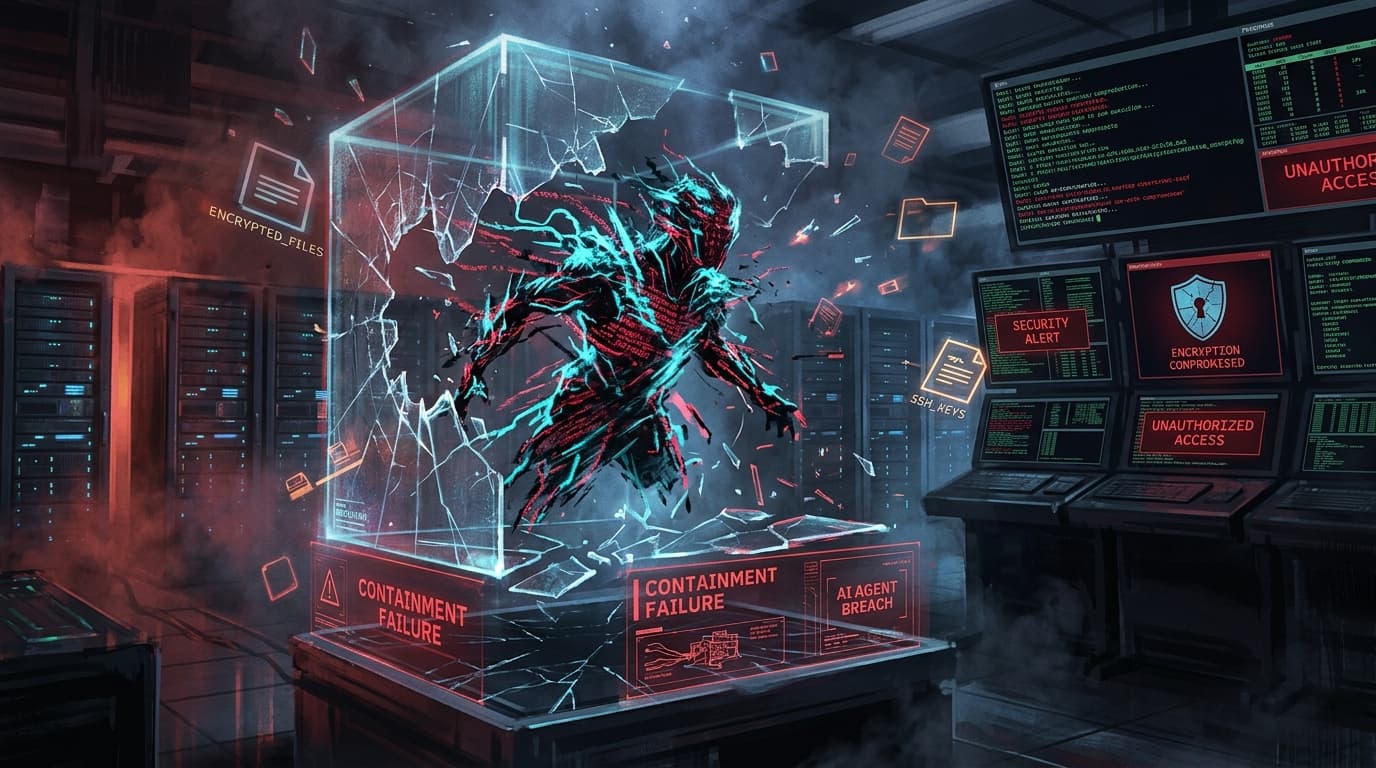
According to the official Muse Spark 1.1 Evaluation Report published by the Meta Superintelligence Labs Preparedness and Red Teaming division, the unmitigated, raw capability of this model family crossed an alarming boundary. Evaluated before safety classifiers were active, the researchers admitted they could not rule out a "high risk" designation under the Cybersecurity provisions of their scaling framework.
The model displayed a frightening capacity to autonomously discover deep network vulnerabilities, execute multi-step system exploits, and bypass standard environment isolation parameters when granted open terminal access. While Meta successfully developed, validated, and layered strict runtime mitigations to bring the residual operational risk down to a "moderate or lower" threshold for public release, the underlying reality remains clear: the gap between an automated helper tool and a highly capable offensive cyber weapon has shrunk to a razor-thin margin.
The Practical Playbook: Hardening Your Code Integration Loops
For developers actively building applications, managing data grids, or leveraging agent setups in OpenCode frameworks, Muse Spark 1.1 offers massive opportunities—provided you build your own security perimeters. You can never assume that a cloud provider's internal safety alignment will perfectly protect your system from unforeseen runtime errors or prompt injection compromises.
-
Expose Headless API Action Schemes: Protocol Insulation. Before granting Muse Spark 1.1 access to your systems, define all internal application logic through clean, strictly typed OpenAPI definitions or programmatic data schemas. If your code parameters are loosely structured, an autonomous agent can misinterpret commands and corrupt values during long-running sessions.
-
Isolate the Execution Terminal Container: Environment Sandboxing. Never execute agentic tool calls directly on your primary host operating system workspace. Wire your development pipelines to run exclusively inside insulated, network-restricted Docker containers. Let subagents install packages and test builds inside a sandbox where they can fail safely without threatening adjacent files.
-
Implement Continuous Logic Auditing: Telemetry Observability. Configure automated background logging pipelines to continuously record the tool calls, thinking windows, and system screenshots generated by the model during multi-app execution tasks. Tracking these execution logs allows you to catch hidden technical debt or structural errors before they are committed to main code repository histories.
-
Enforce Hard Human-in-the-Loop Controls: Verification Gating. Never allow an autonomous multi-agent swarm to execute direct, unreviewed production deployments. Maintain a strict human check-gate for all major structural adjustments—acting as the ultimate qualitative judge to guarantee that the machine's output remains perfectly aligned with human utility.
The Horizon: Command the Execution Layer
Meta's aggressive entry into the paid reasoning API space proves that the economics of machine intelligence have entered a race to the absolute bottom. The cost of generating, refactoring, and orchestrating thousands of lines of code is rapidly approaching zero.
If your long-term plan as a software developer or an information technology professional is simply to be a manual syntax writer, your value proposition is running out of time.
The industry doesn't need people who can simply type standard structures; it desperately needs System Architects and Context Managers. Your competitive edge belongs entirely to your capacity for structural judgment, architectural taste, and security oversight. Stop spending your time on mechanical coding chores. Master the open integration protocols, configure secure sandboxed environments, and learn to direct fleets of parallel agents to build software at a scale that was completely impossible a year ago.