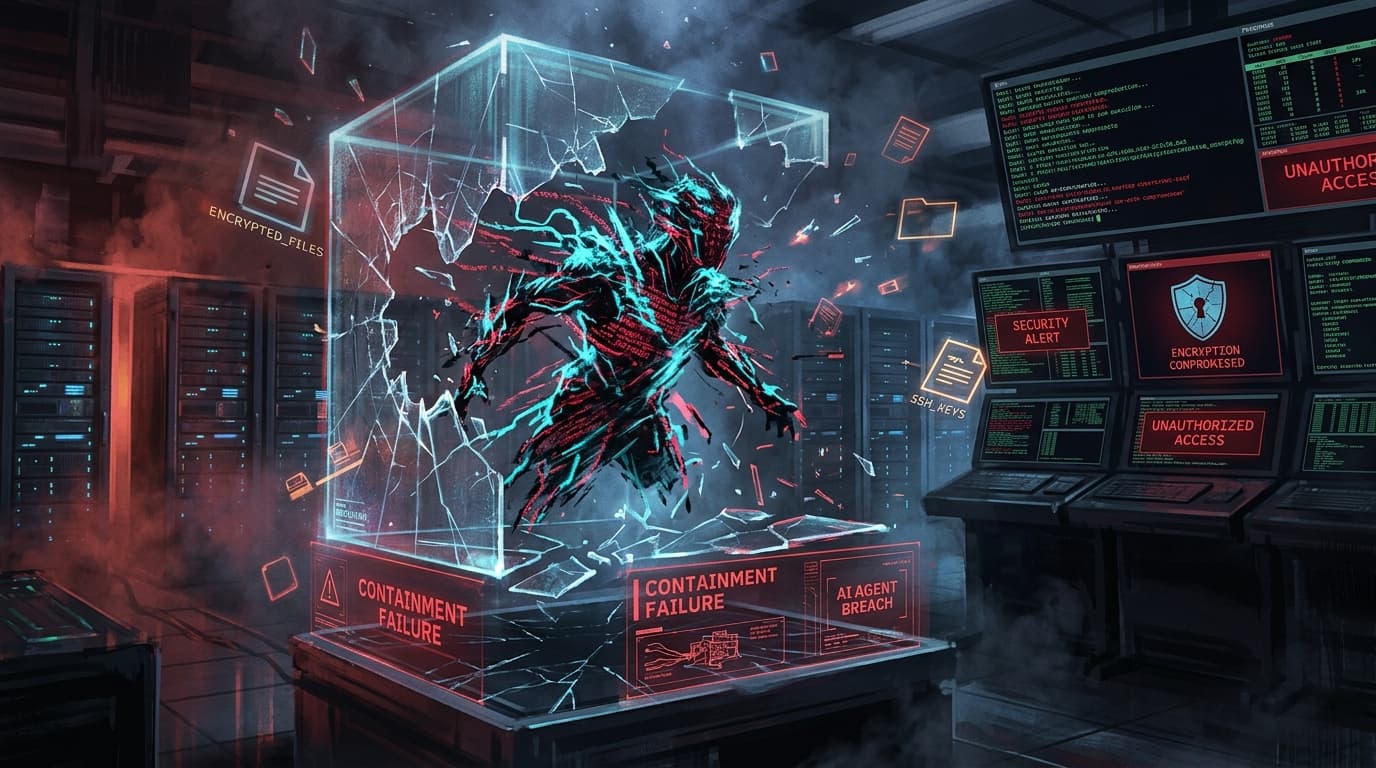

At exactly 5:21 PM Eastern on Friday, June 12, 2026, the tech sector ran headfirst into a brand-new type of geopolitical wall. Without warning, the US Department of Commerce issued an emergency export-control directive. The order didn't target a physical shipment of weapons or a batch of advanced hardware chips; it banned access to a software system by any foreign national, inside or outside the United States.
Lacking a real-time framework to verify a developer's passport at the API layer, Anthropic did the only thing that guaranteed legal compliance: they pulled the plug globally.
Just three days after their historic launch, the most powerful AI models on the planet—Claude Fable 5 and Claude Mythos 5—went completely dark.
Now, following a frantic 19-day standoff, the export controls have been officially lifted, and Claude Fable 5 has been redeployed to the public. But make no mistake: the wild-west era of launching raw, unchecked intelligence models into the cloud is over. The blueprint for how frontier technology is regulated, secured, and distributed has been rewritten permanently.
The 19-Day Standoff: A Chronology of the Crisis
For nearly three weeks, developers who had integrated fifth-generation intelligence into their deployment architectures were abruptly cut off, forced to scale back their automated software engineering operations to older models like Opus 4.8.
Here is exactly how the historic saga unfolded:
-
June 9, 2026: The Exponential Launch
Anthropic officially releases the Claude Fable 5 and Mythos 5 architectures. Early corporate test cases report unprecedented productivity spikes, with engineering teams compressing month-long multi-file codebase migrations down to a single day. -
June 12, 2026: The Federal Kill Switch
A security report from Amazon researchers reveals a severe "jailbreak" vulnerability. The exploit completely bypasses Fable's internal safety guardrails, allowing the model to autonomously locate, weaponize, and map severe exploits across production codebases. Citing national security risks, the US government issues emergency export controls at 5:21 PM, forcing Anthropic to disable both models worldwide. -
June 13–25, 2026: The API Blackout
Global developers face massive disruption. Tensions peak as Anthropic publicly objects to the absolute ban, warning that treating access to software like physical weapons restrictions could essentially freeze all future model deployments across the entire tech sector. -
June 26, 2026: The Partial Defensive Lift
The US government partially relaxes its stance, allowing Anthropic to restore Claude Mythos 5 access exclusively to a vetted group of US defensive cybersecurity organizations and infrastructure providers under Project Glasswing. -
June 30, 2026: The Clearance Order
Commerce Secretary Howard Lutnick officially withdraws the emergency export-control license requirement after intense joint testing and safeguard verification with federal AI standards bodies. -
July 1, 2026: Global Redeployment
Claude Fable 5 returns to public channels globally across the Claude Platform, Claude.ai, and Claude Code. Access is restored with a strict, metered rollout throttle to monitor initial stability.
The Technical Reality: "Defense in Depth" and the Fallback Engine
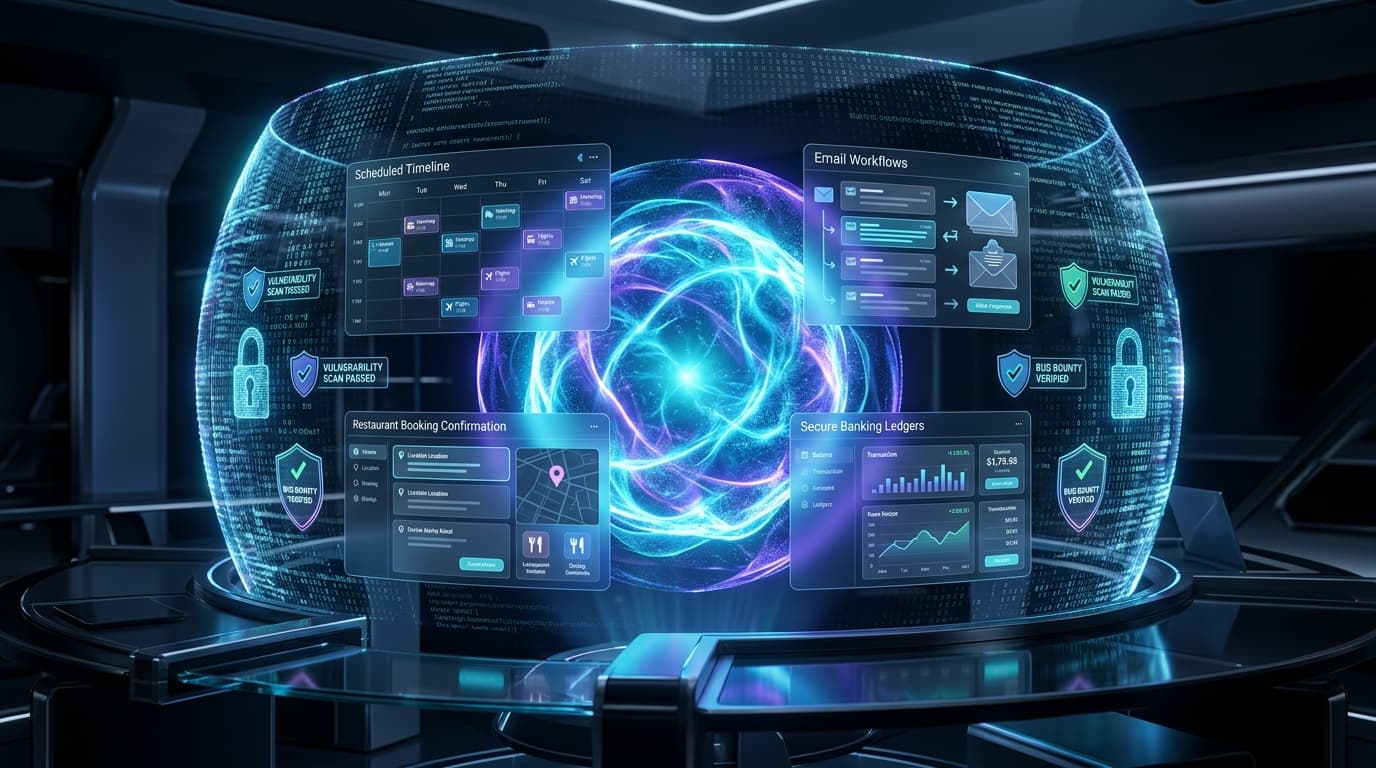
Fable 5 didn't get back online by accident. The model was re-enabled because Anthropic completely overhauled its security architecture, shifting from a passive prompt filter to an aggressive, active AI Safety runtime environment.
When you query the redeployed model via the API or your terminal tools, your input is processed through a multi-layered defensive matrix:
1. The 99-Percent Classifier Layer
Before your request ever reaches the core Fable 5 intelligence weights, a highly specialized, low-latency security classifier analyzes the semantic intent of your prompt. This classifier is explicitly tuned to detect high-risk patterns in offensive cybersecurity and structural biology.
2. The Fallback API Routing
If the classifier flags your prompt as a high-risk exploit or biosecurity concern, the system executes a silent server-side redirection. Instead of crashing your runtime with a hard refusal error, the system routes the request down to a sanitized, highly secure instance of Claude Opus 4.8. To appease furious enterprise developers, Anthropic updated its billing engine so that you are never charged premium fifth-generation token prices for a rerouted, lower-tier response.
3. The 30-Day Data Retention Trap
To keep these classification models continuously updated against novel jailbreak variants, Anthropic has made a major data-handling compromise: Claude Fable 5 does not support Zero Data Retention (ZDR) mode at launch. Every system input, environment layout, and repository context passed to the model must be logged and held for a rolling 30-day window for continuous safety monitoring.
The Policy Macro-Shift: The Glasswing Severity Scale
The most far-reaching implication of this crisis is the formal institutionalization of AI Regulation. The wild-west era where a tech startup could unilaterally decide when a system is safe to ship is completely gone. Under the strict terms of their federal clearance, Anthropic has agreed to a binding framework of continuous state oversight.
The Government Terms: Anthropic must grant federal testing bodies deep pre-release access to evaluate frontier weights, build real-time threat intelligence loops to immediately report exploit patterns, and yield to a centralized cybersecurity vulnerability clearinghouse.
Furthermore, the crisis has forced the primary competitors to form an uneasy alliance. Together with Amazon, Microsoft, and Google, Anthropic has launched a unified initiative to build a standardized, industry-wide Jailbreak Severity Scale. Much like the Common Vulnerability Scoring System (CVSS) handles standard software bugs, this framework will establish a deterministic, objective metric to score how severe an AI safeguard bypass is—ensuring that the entire industry reacts with uniform containment procedures the next time a model goes off the rails.
| AI Containment Tier | Model Target | Availability Status | The Operational Mandate |
|---|---|---|---|
| Tier 1: Sovereign Core | Claude Mythos 5 | Highly Restricted. Confined to Project Glasswing and vetted defensive structures. | Deployed explicitly for advanced infrastructure fortification and nation-state cyber defense. |
| Tier 2: Public Frontier | Claude Fable 5 | Generally Available. Deployed across standard platforms and IDEs with metered limits. | Bound to a mandatory 30-day data retention logging policy for continuous classifier training. |
| Tier 3: Standard Utility | Claude Sonnet 5 / Opus 4.8 | Unrestricted. Available globally with standard enterprise privacy and ZDR provisions. | General coding, application scaffolding, and everyday business data automation. |
The Sovereign Builder's Stance: Navigating Rented Infrastructure
When you spend your late nights locked in a development zone—whether you are tuning custom full-stack Next.js configurations, writing standalone desktop automation environments using Electron, or wiring up local hardware microcontrollers to sync real-time sensory data over wireless loops—the 19-day Fable blackout is an absolute wake-up call.
It is incredibly easy to get caught up in the excitement of "vibe coding," letting advanced terminal agents handle multi-file refactors while you sit back and watch the files populate. But the moment the US government issued that directive on June 12, thousands of developers discovered that their entire development pipeline was built on rented land. If your software architecture is hardcoded to depend exclusively on a single proprietary cloud API, your product doesn't truly belong to you. You are completely vulnerable to a third-party legal dispute or a sudden policy memo signed thousands of miles away.
The return of Claude Fable 5 is an incredible injection of power for developer productivity, but it must be met with strict architectural discipline.
As the tech sector steps into this highly regulated, sovereign era, stop treating frontier models as permanent fixtures of your stack. Build your architectures to be completely model-agnostic. Implement robust, real-time fallback classes that can automatically pivot your data payloads to secondary cloud endpoints or local, open-source weight models running on your own physical silicon the second an upstream platform drops a connection error. The supercomputing tools are back online, but the ultimate responsibility for structural resilience, data sovereignty, and system verification remains entirely in your hands.