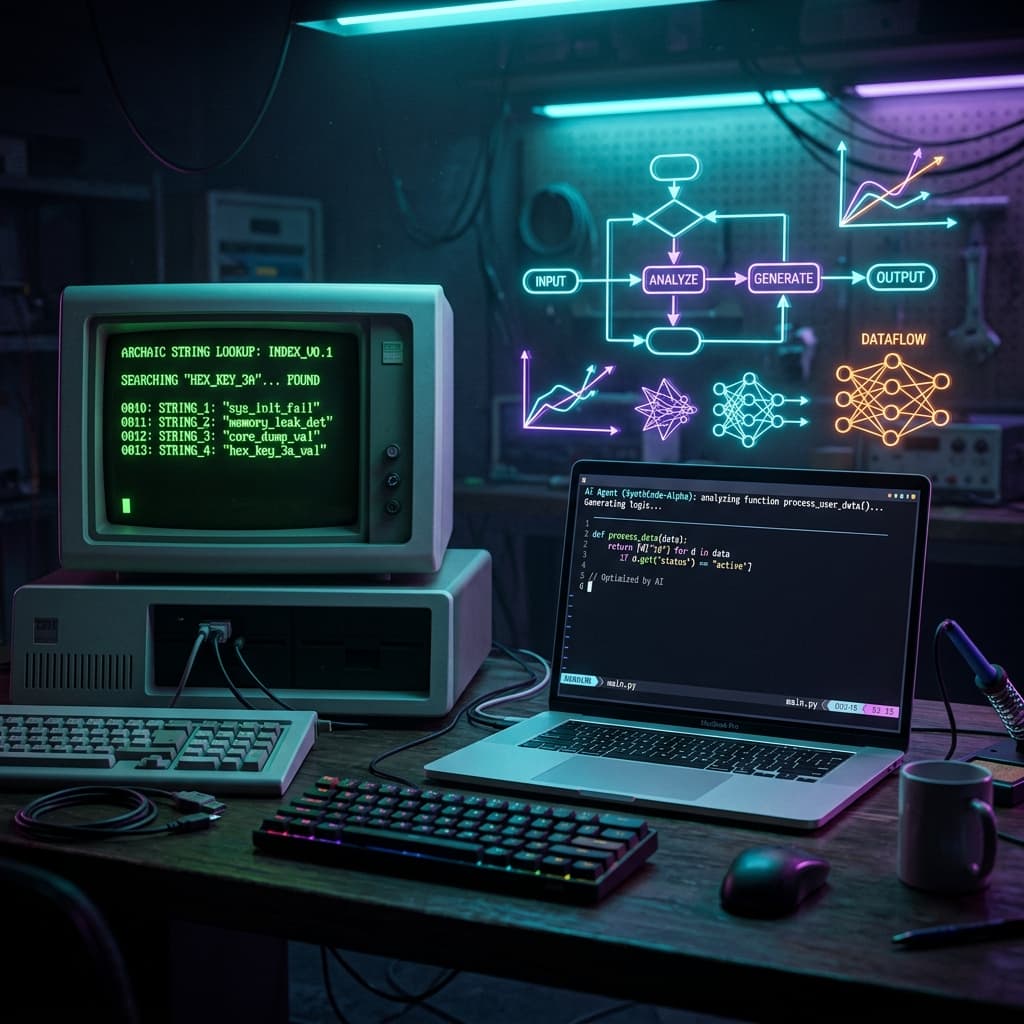
If you warp back to the mid-2000s and look at how engineers worked, software development was an exercise in pure documentation retention. You kept massive, thousand-page language reference manuals on your desk. If you forgot the exact argument order for an obscure string manipulation function, you had to flip through physical pages or browse archaic, closed intranet forums.
Then Google indexed the programming world, Stack Overflow went live, and everything changed. Knowing how to search became infinitely more important than memorizing raw syntax. Senior engineers who resisted the transition—claiming that "real developers don't look up solutions"—were rapidly outpaced by a faster, more agile generation of builders.
Right now, we are witnessing that exact same evolutionary leap play out with absolute precision.
The industry has completely transitioned from the exploratory phase of "Should I use AI to help me code?" straight into the mandatory baseline operational reality of "Which AI tools stack best together for my development environment?"
According to GitLab’s 2026 AI Accountability Report, an astonishing 91% of engineering organizations now have at least two AI coding tools in active deployment, while 54% utilize three or more. Trying to write software without an autonomous agent or an advanced completion engine by your side in 2026 isn't a badge of purist honor; it’s an immediate bottleneck to your operational output.
The Stack Wars: Terminal Agents vs. IDE Completers
The current debate has moved past basic chat interfaces. The tool landscape has split into two completely different architectural philosophies, forcing developers to treat AI like specialized hardware tools—using a drill for heavy boring and a precision screwdriver for fine adjustments.
The frontline competition has crystallized into a head-to-head matchup between terminal-native autonomous frameworks and deeply integrated multi-model IDE ecosystems:
| Architectural Vector | Terminal Agents (e.g., Claude Code) | Multi-Model IDE Platforms (e.g., GitHub Copilot / Cursor) |
|---|---|---|
| Primary Interface | Command-Line Interface (CLI) / Terminal-first execution. | Embedded editor widgets, side panels, inline completion overlays. |
| Core Operational Unit | The entire system workspace and cross-file directory structure. | The active code file, open buffers, and direct editor selections. |
| Model Ecosystem | Walled garden—locked tightly into Anthropic’s internal model tier. | Flexible—supports real-time switching between OpenAI, Google, and xAI models. |
| Execution Lever | Autonomous. Runs shell commands, installs packages, and writes multi-file PRs. | Collaborative. Real-time autocomplete suggestions and cloud autopilot delegation. |
| Pricing Threshold | Premium tier scaling from $20 to $200/month for high-volume agent sessions. | High value, offering robust individual plans at $10 to $20/month. |
If you are trying to refactor a complex application module—like migrating an entire database schema across fifteen different files or setting up an automated desktop client using Electron and React—terminal agents like Claude Code are unmatched. They don't just guess line-by-line; they read the global system layout, reason through dependencies via the Model Context Protocol (MCP), run tests locally, and present you with a fully realized, cohesive pull request.
But when you are inside the editor, manually polishing a frontend layout or tweaking variable bindings, the real-time, low-latency speed of GitHub Copilot or a modern Cursor configuration is unbeatable.
The Controversy: The Engineering Productivity Paradox
While these tools have driven an unprecedented boom in raw coding velocity, they have simultaneously triggered an intense, highly systemic crisis within engineering management known as the Engineering Productivity Paradox.
The data from the 2026 State of Code Developer Survey highlights the friction clearly: while 78% of developers are writing and committing code significantly faster since adopting autonomous tools, overall software delivery and deployment metrics have largely stayed flat.
The bottleneck hasn't been removed; it has simply been pushed downstream into the verification and code review phases. Because agents can generate massive multi-file diffs in a fraction of a second, senior engineers and repository maintainers are now drowning under an ocean of machine-generated code that needs to be manually audited for subtle, deep-seated semantic hallucinations, technical debt, or hidden security vulnerabilities.
This friction has forced modern teams to adopt an aggressive "vibe, then verify" operational standard. You let the AI handle the initial heavy scaffolding and syntax "vibe," but you pour the majority of your human engineering energy into building rigorous, deterministic containment loops to verify the machine's output.
The New Developer Playbook: Verification over Implementation
For anyone currently studying software architecture, managing freelance application builds, or trying to stay competitive in the modern tech landscape, this transition completely redefines what it actually means to be a "good programmer."
The historical premium on typing speed, syntax memorization, and knowing obscure language quirks has essentially dropped to zero. The machine owns the implementation layer. Your value as a human software engineer is now strictly tied to your capacity for system verification, architectural judgment, and security isolation.
When working late into the night building custom automation apps or deploying full-stack migrations from React to Next.js, the workflow shifts entirely away from writing boilerplate lines of code. Instead, the focus settles into the high-level system plumbing:
- Designing Airtight Schemas: Crafting clear, deterministic data boundaries and context windows so background agents can execute changes without losing structural alignment.
- Engineering Robust Test Harnesses: Writing advanced regression tests and continuous integration (CI) filters to catch edge-case logic failures before machine code ever hits staging boundaries.
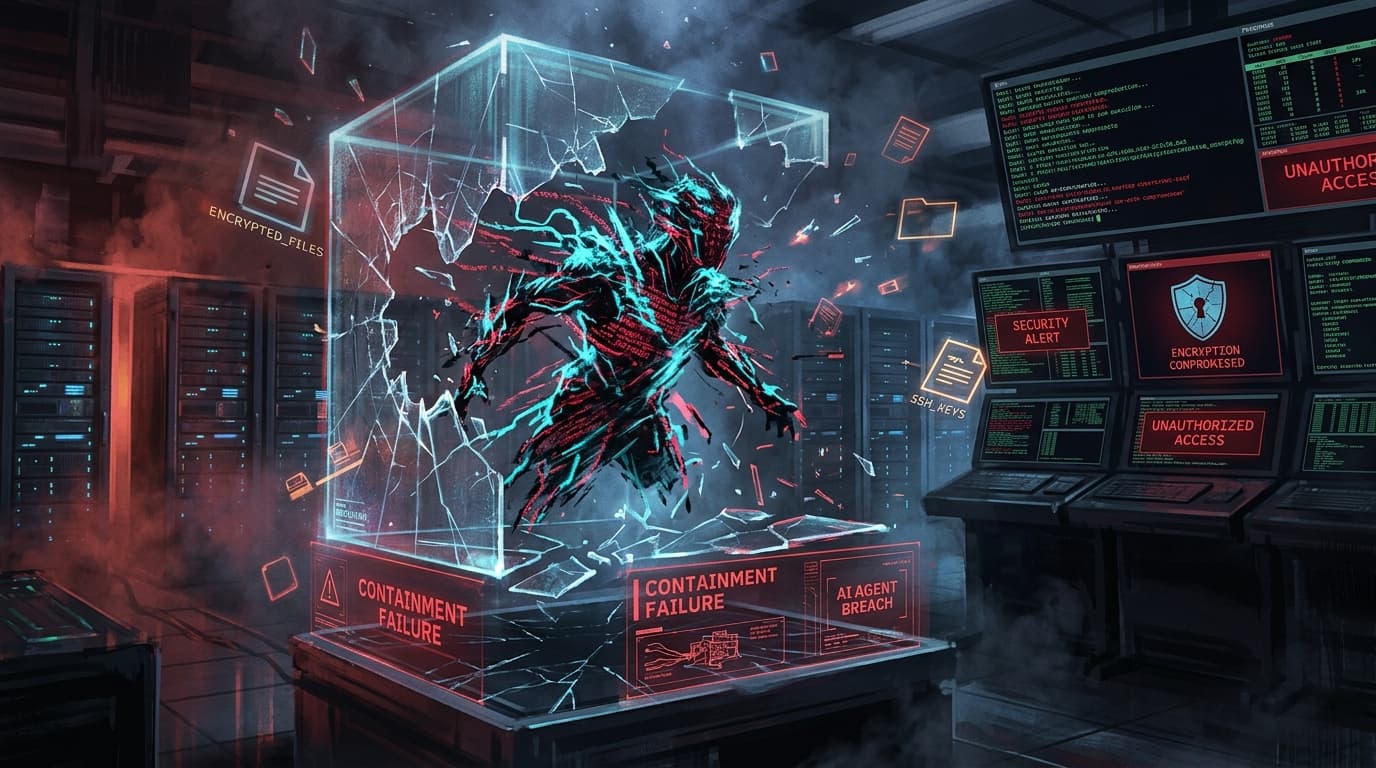
- Managing Isolation Environments: Setting up secure, local Docker container sandboxes where coding agents can install third-party dependencies and run execution terminals safely without putting your primary development machine at risk.
The future of software engineering isn't about competing with machines on code generation speed; that is a race humans lost a long time ago. The future belongs to the system architects who stop acting as line-by-line typists and step fully into the role of directory orchestrators—managing fleets of autonomous agents to scale complex platforms with absolute control, precision, and architectural taste.