If you watched the Google I/O 2026 keynote recently, you probably noticed a radical shift in vocabulary. The word "chatbot" is officially dead. The era of the single-turn prompt—where you ask a question, wait for a paragraph of text, copy-paste it, and repeat—is being phased out right in front of us.
We have officially entered the Agentic AI era.
With Google doubling down on its new Antigravity 2.0 platform, launching its asynchronous coding agent Jules, and rolling out Gemini Spark as an always-on, 24/7 background worker, the narrative has flipped. We are no longer building tools that wait for our instructions. We are building digital co-workers capable of managing multi-step workflows, executing code in isolated environments, and making autonomous micro-decisions while we sleep.
For anyone building software, managing full-stack applications, or studying the trajectory of artificial intelligence, this isn’t just a cool product update. It is a fundamental rewiring of how software engineering, content creation, and digital workflows operate.
The Technical Pivot: From Copilots to Autonomy
To understand why 2026 is the turning point, you have to look at how the underlying architecture has evolved. For the last couple of years, developers have relied heavily on inline code assistants. Tools like Cursor or GitHub Copilot are great, but they are synchronous. They require you to sit there, look at the screen, accept or reject a suggestion, and remain the ultimate bottleneck in the development loop.
The announcements at I/O blew that model apart. Take Jules, Google’s new async coding agent. It doesn't just autocomplete your function; it spins up a secure cloud virtual machine, clones your repository, analyzes the code utilizing Gemini 3.5 Flash's massive context window, drafts a multi-file implementation plan, runs its own testing pipeline, and opens a completed pull request.
The execution shift: You don't prompt Jules to write a feature line-by-line. You assign it ten structural tasks simultaneously, close your laptop, and return later to ten distinct pull requests waiting for review.
This level of autonomy is made possible by a qualitative leap in model speed and context management. The newly released Gemini 3.5 Flash is explicitly co-optimized for these heavy, long-horizon agentic loops, running four times faster than previous frontier models. When an agent can ingest a 2-million-token monorepo all at once, it doesn't just guess code snippets based on a single file—it understands the systemic relationships across your entire backend architecture.
The Builder’s Reality: Shifting from Coder to Orchestrator
Wrestling with full-stack development and specializing in AI engineering gives you a front-row seat to this friction. In my own projects—whether optimizing web architectures or building automated data pipelines—the biggest time sink has never been thinking of the logic; it’s been the manual plumbing. Writing the boilerplates, handling API integration anomalies, configuration files, and debugging endless edge cases in testing environments.
With frameworks like the Antigravity CLI and the Agent Development Kit (ADK 1.0) going mainstream, the developer's day-to-day role is undergoing a massive transformation.
[Old Workflow]
Write Code ──> Manually Write Tests ──> Debug Errors ──> Manual Deploy

[Agentic Workflow]
Define Architecture ──> Orchestrate Agent Team (Jules + Custom Skills) ──> Review PRs
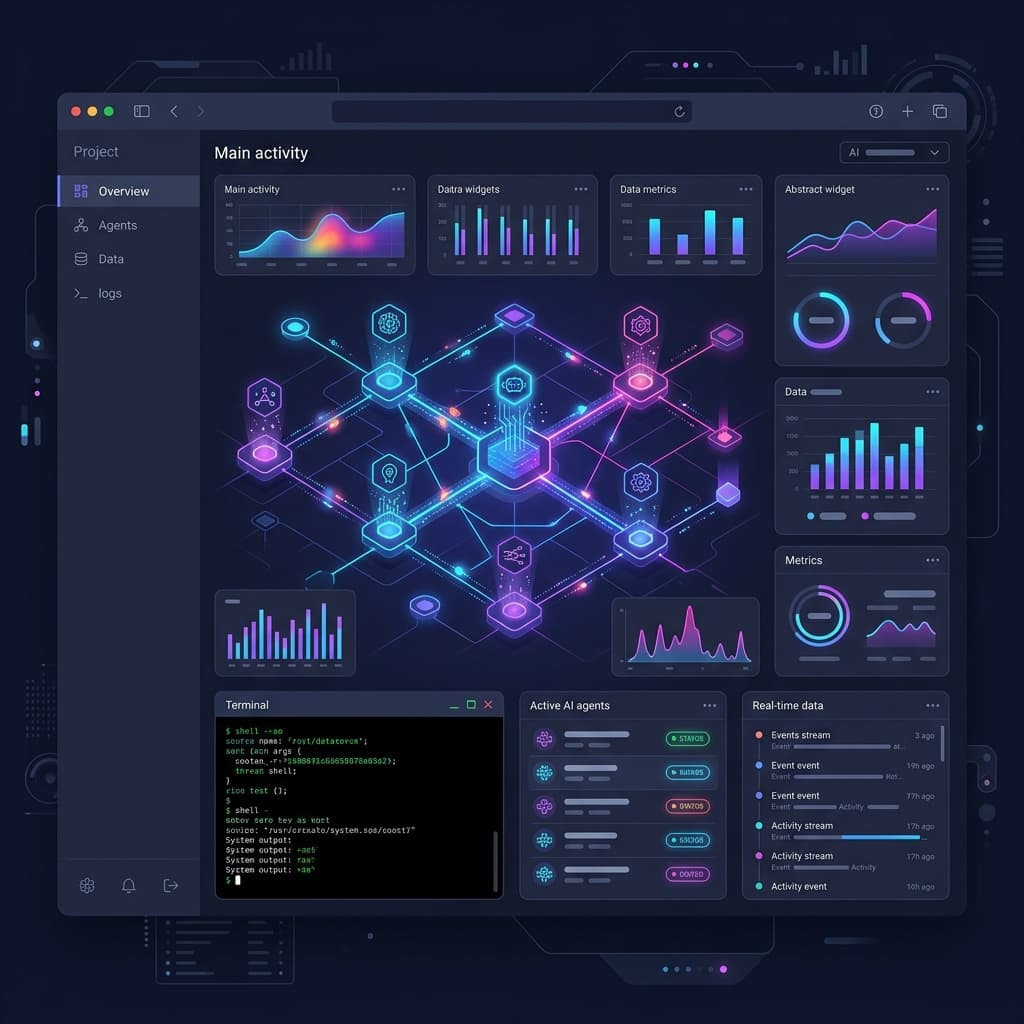
Instead of spending hours writing standard CRUD operations, developers will operate more like system orchestrators. Using the AgentTeam API or the new Agent2Agent (A2A) streaming protocols, we can now orchestrate teams of specialized agents—one tracking database migrations, one handling frontend state, and another running automated security audits.
You become the manager of an elite, hyper-fast digital development team. The technical skill shifts away from raw syntax memorization and moves squarely toward system architecture, API orchestration, and precise context engineering.
The Hard Truths: Controversies and Economic Gaps
Of course, a shift this aggressive doesn't happen without serious friction. There are glaring real-world implications that the tech industry's marketing gloss tries to skip over, but we need to talk about them.
1. The Entry-Level Extinction Risk
If an asynchronous agent like Jules can autonomously build out features, run tests, and fix its own bugs, what happens to the traditional junior developer role? The industry has historically relied on entry-level engineers to handle the routine, repetitive coding tasks while they learn the ropes. If agents swallow those tasks entirely, the bridge between being a university student and becoming a senior architect gets incredibly steep. We risk creating a massive experience gap where the industry demands senior system orchestrators but provides zero entry-level code-monkey roles to train them.
2. The Heavy Price of Always-On Compute
Agentic AI isn't cheap. Running continuous background loops, executing code in isolated Linux environments via the Gemini API, and constantly maintaining massive context windows requires a staggering amount of compute.
Google’s introduction of the $100-per-month AI Ultra plan for high-tier Antigravity access proves that the future of development is increasingly gated by financial resources. If building competitive applications requires a fleet of premium, 24/7 autonomous agents running on dedicated cloud infrastructure, indie developers and students face a whole new baseline cost of entry just to keep up.
3. The Security and Autonomy Dilemma
When tools like Gemini Spark operate 24/7 across your personal workspace—parsing emails, executing workflows, interacting with third-party tools via the Model Context Protocol (MCP)—the surface area for data vulnerabilities explodes. A single malicious prompt injection embedded in an incoming email could theoretically trick a background agent into exporting sensitive files or modifying a cloud database without explicit real-time human confirmation.
The Horizon: Unlocking the Solo Megaproject
Despite the risks, the sheer volume of opportunity here is exhilarating for independent creators and technical builders.
The economic leverage this grants a single individual is unprecedented. Historically, if you had a complex full-stack product idea, a music distribution concept, or a digital media platform, you needed a small team or months of isolated runway to get a robust MVP off the ground.
Today, the infrastructure friction has completely dissolved. You can prototype an entire system natively in tools like Google AI Studio, export the complete conversational context directly into local dev environments via Antigravity 2.0, and have an autonomous team implement the features.
The barrier to entry isn't what you can manually type anymore; it’s how deeply you understand the ecosystem and how creatively you can connect the dots. 2026 is the year we stop talking to AI, and start building alongside it. The tools are live, the terminal commands are ready, and the builders who learn to orchestrate these agent networks right now are the ones who will define the next wave of the internet.