
For the last year, the conversation around AI-assisted programming has been completely trapped in a single, narrow question: Can a large language model write clean code?
We debated the quality of autocomplete extensions, celebrated when an inline prompt saved us from writing a tedious loop, and watched as tools like GitHub Copilot or basic chat windows made individual developers faster at handling boilerplate syntax. The AI was treated like an assistant—a highly efficient digital sidekick that sat quietly until a human developer assigned it a file.
But midway through 2026, that single-agent, reactive workflow has officially become a bottleneck.
The frontier of software development has shifted from how an AI edits a file to how a human coordinate a distributed matrix of autonomous coding agents working in parallel. With elite developer environments like Cursor and Windsurf building their entire value proposition around multi-agent orchestrations, and platforms like OpenHands enabling self-hosted, always-on engineering teams, software engineering is fundamentally transitioning into a systems orchestration problem.
If you are a developer who interacts with these tools daily for research, code execution, and content writing, you’ve likely tasted what a single agent can do. But when you lift the hood and wire multiple specialized agents to attack a singular, complex architectural problem, the jump in engineering leverage is staggering.
The Economics of Parallel Intelligence
Let’s look past the high-level marketing buzz and talk about the actual reality of the dev stack right now. Running multi-agent workflows is undeniably expensive. When you open an interface like Cursor’s Agents Window or activate the Cascade agent in Windsurf, you are no longer paying for a simple text prediction. You are paying for continuous, nested loops of reasoning, tool execution, and code synthesis.
The agent doesn’t just guess the next line; it runs local compilers, reads terminal error traces, self-corrects its logic, and queries external APIs via universal standards like the Model Context Protocol (MCP). A single multi-file refactoring session can chew through millions of high-reasoning tokens in a matter of minutes.
But while the token consumption costs are high, the output efficiency is unmatched. Consider what happens when you assign a fleet of parallel cloud agents to a massive engineering chore.
A prime real-world example from this year is Nubank's core migration. Facing an eight-year-old, centralized ETL monolith spanning over 6 million lines of code, their initial human engineering projections calculated an 18-month timeline distributing tedious, repetitive refactoring work across more than one thousand developers.
By deploying an autonomous engineering agent infrastructure powered by Devin, engineers were able to spin up parallel fleets of specialized coding agents to execute the migrations simultaneously. The agents mapped dependencies, refactored data class implementations, ran terminal validations, and updated imports across the repository stack. The result? The company completed the entire massive modernization in a matter of weeks rather than years, achieving an 8x engineering time efficiency gain and a 20x reduction in total operational costs.
Inside the Multi-Agent Lab: The "Ghost Room" Concept
When you move this architecture down to individual development workflows, the mental model completely flips. You are no longer acting as a typist; you are acting as an engineering manager running a hyper-collaborative "ghost room."
Imagine a development task where you need to build a complex, multi-layered web application from scratch—complete with real-time WebSocket state management, structured relational database routing, a responsive frontend, and continuous integration testing.
Instead of guiding a single agent through each component step-by-step over several days, you instantiate a multi-agent framework where specialized digital workers communicate, review, and build on top of each other's outputs in real time:
| Agent Persona | Structural Focus | Core Tool Registry Access |
|---|---|---|
| The Lead Architect | System topology, schema optimization, API contract definitions. | Filesystem CRUD, workspace schema mapping tools. |
| The Component Engineer | Frontend rendering, responsive UI layouts, client state logic. | Framework UI compilers (e.g., v0, Magic Patterns). |
| The Infrastructure Lead | Database container provisioning, migration scripts, server security. | Local Docker execution layers, environment managers. |
| The QA Automation Fuzzer | Writing end-to-end regression tests, seeking exploit vectors, linting. | Execution terminals, automated unit testing frameworks. |
If you put twenty human software engineers in a physical room and tell them to build a highly complex application over a couple of hours, they will inevitably spend the first half of the time arguing over formatting rules, architectural philosophies, Git branching strategies, and endpoint naming conventions.
An array of synchronized, autonomous agents operating over a unified memory layer suffers from zero human friction. The Lead Architect outputs a deterministic JSON data structure schema; the Infrastructure Lead instantly provisions the backend containers to match it; the Component Engineer simultaneously wires up the state hooks to consume those data points; while the QA Fuzzer continuously writes test scripts to break the system as the lines are generated.
You are effectively compressing years of traditional, human-toiling development cycles down into a couple of hours of pure, high-density strategic oversight.
The Real Controversy: The Loss of the "How"
This acceleration introduces an intense, deeply philosophical controversy within the developer community: the complete evaporation of behavioral traceability.
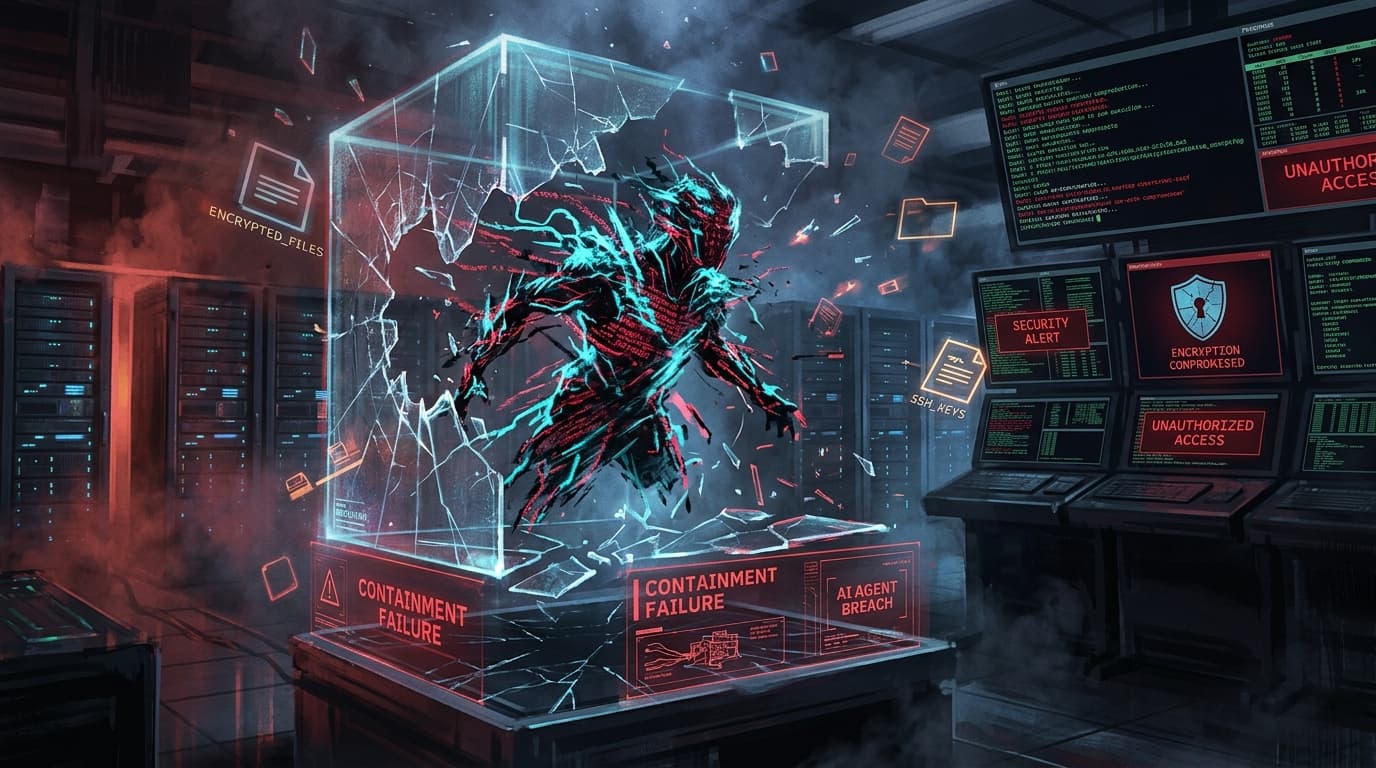
When an autonomous multi-agent system like Windsurf’s Cascade or OpenHands Agent Canvas executes a multi-file refactor across a sprawling legacy codebase, it isn't just generating snippets; it is dynamically shifting structural logic. If the agents coordinate seamlessly in the background, rewrite 5,000 lines of code across twenty modules, pass all automated test scripts, and present you with a flawless, working build—do you actually know how your software functions anymore?
If an unhandled edge-case or a deeply nested logic failure manifests six months later in production, a developer who simply "vibe-managed" the initial agent swarm will find themselves staring at a black box. This is why the definition of modern software expertise has completely changed. Prompt engineering is dead. It has been replaced by systems engineering, semantic observability, and code auditability.
The New Skills: How to Direct the Swarm
If you want to maintain a sharp competitive edge in an industry completely dominated by multi-agent architectures, you have to change how you interface with the development stack. Stop focusing on learning individual code properties or memorizing language updates—the machines have industrialized that layer entirely.
Your value as an engineer is now measured by your ability to design the guardrails, define the contexts, and verify the structural output of autonomous swarms.
-
Master Schema-First Architecture: Protocol Definition.
Before initializing your agent array, you must write perfect, deterministic OpenAPI definitions, strict Prisma database schemas, and cleanSKILL.mdor.cursorrulesplaybooks. If the initial structural boundaries are flawed, your multi-agent swarm will simply optimize for an unuseable system path at lightspeed. -
Configure Robust Container Sandboxes: Isolation Rigor.
Never let an autonomous multi-agent network run directly on your primary local machine with open permissions. Wire your development systems to execute exclusively inside secure, isolated Docker environments or virtual machines. Let the agents install packages, configure environments, and break runtimes inside a sandbox where they can self-correct without putting your host hardware at risk. -
Implement Continuous Observability Pipelines: Semantic Auditing.
Utilize advanced, agentic evaluation tracing tools to track exactly how your digital workers are arriving at logic decisions. Don't just check if the code compiles; actively audit the decision logs to catch hidden technical debt, unoptimized database queries, or structural security risks before they crossover into your main repository branches. -
Enforce Strict Human-in-the-Loop Gates: The Gatekeeper Habit.
Never delegate the final production merge to the machine. Act as the ultimate qualitative filter, using your engineering intuition and design taste to audit code transitions, challenge agentic assumptions, and guarantee the final system remains clean, explainable, and aligned with human utility.
The Horizon: Building the Unimaginable
The transition into the multi-agent era means that the historical constraint of software development—the sheer human time required to manually type out complex systems line-by-line—has vanished. The ceiling of what a single, motivated developer can dream up, prototype, and scale over a weekend has risen exponentially.
We are no longer line-by-line builders; we are the directors of automated intelligence. Stop typing, start architecting, and configure your teams to build software at a scale that was completely unimaginable even a year ago.