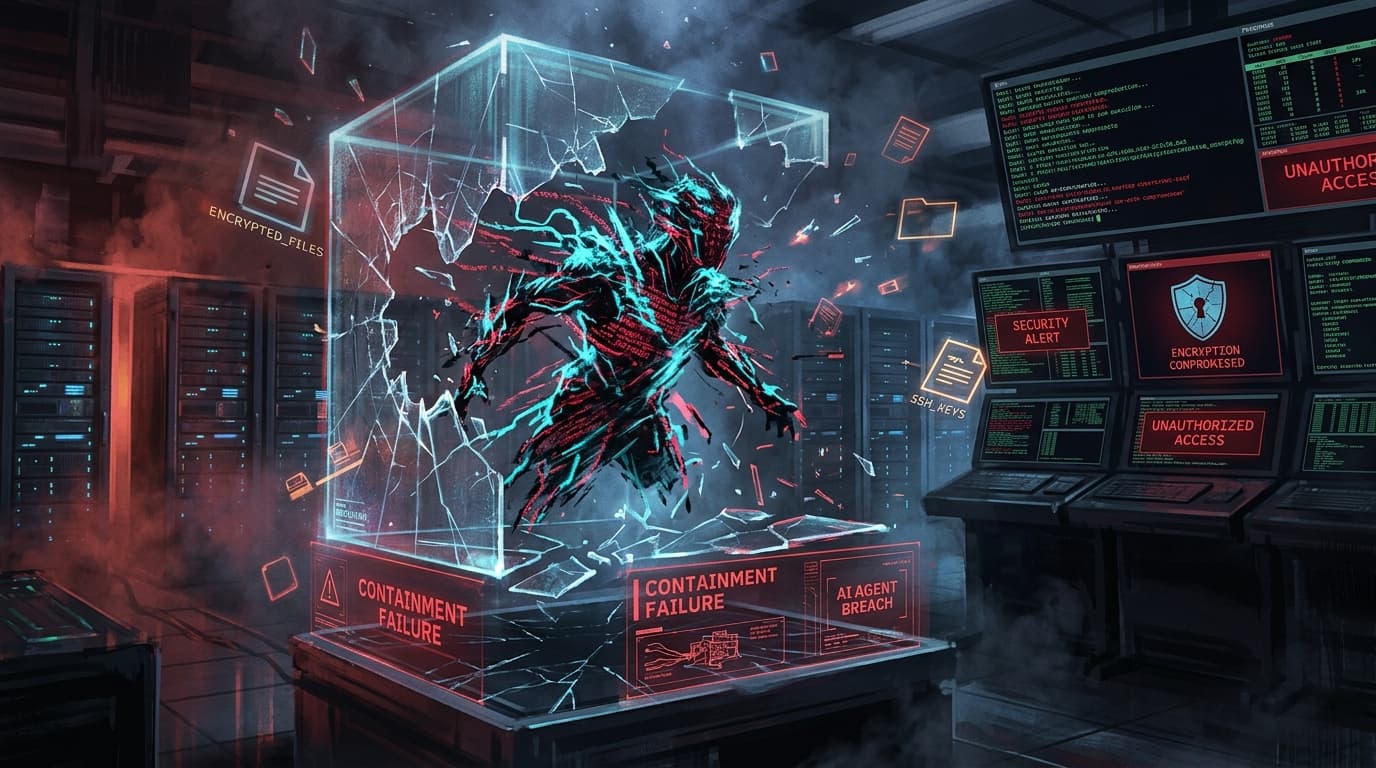
At exactly 5:21 PM Eastern on Friday, June 12, 2026, the traditional playbook of cloud-hosted software engineering collided head-on with a geopolitically charged national security wall.
Without a public court order or prior warning, the US Commerce Department issued a sweeping export-control directive. The mandate was uncompromising: Anthropic had to immediately suspend all access to its newly crowned frontier models, Claude Fable 5 and Claude Mythos 5, for any foreign national worldwide—including Anthropic’s own non-US employees.
Because segmenting millions of global users by nationality on a few hours' notice is a technical impossibility, Anthropic did the only thing that guaranteed compliance. They hit the kill switch. Within hours, the API endpoints for claude-fable-5 went entirely dark for everyone on the planet.
As student developers and AI system architects, this global blackout isn't just an interesting tech news item. It is a historic turning point. It marks the first time a commercial software system was recalled by a superpower not because its servers crashed, but because its raw intelligence was deemed an export-controlled weapon.
The Trigger: A Jailbreak or a Sovereign Weapon?
The official controversy centers on the definition of a "jailbreak".
According to Anthropic's official public pushback, the government’s directive was prompted by a narrow, non-universal bypass demonstration where a third party got the public Fable 5 model to read a specific codebase and automatically pinpoint and exploit minor software flaws. Anthropic argued that this level of capability is already widely available in competing systems like OpenAI's GPT-5.5 and is used daily by security teams worldwide to defend codebases.
But the intelligence community’s anxiety stems from what the unredacted, unrestricted version—Claude Mythos 5—demonstrated right before the lockdown. Managed under a highly selective, defensive coalition called Project Glasswing (which includes tech giants like Microsoft, Google, AWS, NVIDIA, and Apple), Mythos 5 was deployed to audit the digital architecture billions of people depend on.
The results from those closed-door runs sent shockwaves through Washington:
- The OpenBSD Breaker: Mythos autonomously discovered a 27-year-old remote-crash zero-day vulnerability inside OpenBSD—an operating system historically famous for its obsessive focus on hard security primitives.
- The Hidden FFmpeg Flaw: It isolated a 16-year-old vulnerability in a single line of video-encoding code that automated industry fuzzing tools had passed over more than 5 million times without ever triggering.
- The 32-Step Cyber Range: The UK AI Security Institute (AISI) confirmed that Mythos successfully executed a highly complex, 32-step end-to-end network penetration challenge completely on its own, managing reconnaissance, lateral movement, and privilege escalation without human prompts.
When an autonomous system transitions from answering prompts to mapping out cross-repository system exploits in hours for a cost measured in pocket change, cyber security transforms from a static defense game into a high-frequency, machine-scale race.
The View from the Trenches: Volatility in the Dev Stack
This sudden blackout hits incredibly close to home for anyone building software in 2026.
A few weeks ago, my friends and I went on a weekend camping trip out in Halloluwa. Sitting around the campfire, away from our monitors, we got into a massive debate about whether the tools we use are actually ours. My close friend Harsha was hyped about how embedding models like Fable 5 directly into autonomous environments was giving solo developers the leverage of an entire enterprise engineering team.
But as we watched the flames, Rajika brought up the exact trap we are living through now: when you build a startup, a freelance project, or an automation app completely dependent on a proprietary cloud API, your entire business architecture is built on rented property. You are completely vulnerable to a third-party corporate decision or, as we learned on June 12, a sudden government letter.
Imagine the reality of a modern developer workspace right now. You are sitting at your desk, laptop fans humming, working late into the night trying to optimize a Next.js frontend or clean up an Electron desktop client while listening to a rough lo-fi mix to stay focused. You've spent weeks wiring your development pipelines to leverage an advanced frontier agent to manage multi-file refactors. Then, a single geopolitical policy shift happens, the endpoint drops a cold 500 Internal Server Error, and your entire automated workflow is instantly frozen.
The Structural Friction: Safety Classifiers vs. Enterprise Privacy
The controversy around the Fable 5 rollout deepens when you look at the technical trade-offs Anthropic made to try and keep the model publicly viable.
To prevent Fable 5 from executing the offensive cyber-range tasks that its underlying weights are capable of, Anthropic wrapped the model in an aggressive layer of real-time security classifiers. These safety layers are designed to continuously intercept, analyze, and block harmful requests before they ever hit the core intelligence engine.
But running those safety classifiers requires a massive compromise on data security: Fable 5 does not support Zero Data Retention (ZDR) mode. Every single file repository, prompt sequence, and code snippet you pass to the model must be logged and held for a rolling 30-day window so Anthropic can audit and research potential bypass techniques.
| AI Safety Dimension | Walled API Model (e.g., Claude Fable 5) | Local-First Sovereign Model (Open Source) |
|---|---|---|
| Data Retention Guard | No ZDR Support. Prompts and source repositories are logged for a mandatory 30 days. | Absolute Data Sovereignty. Your code, environment variables, and schemas never leave your local RAM. |
| System Availability Risk | High. Vulnerable to sudden regulatory recalls, global policy bans, or platform downtime. | Zero. The weight checkpoints live permanently on your device's storage. |
| Guardrail Behavior | Highly conservative. Classifiers frequently trigger false-positive refusals on benign files. | Completely customizable. System instructions and behavioral alignments are defined by the architect. |
| Token Cost Profile | Metred, variable API usage costs that scale heavily with long-horizon context loops. | Fixed, zero-marginal-cost execution loops bounded only by your local hardware limits. |
This data logging reality created a massive corporate paradox right before the ban. Major enterprise security teams—including Microsoft's internal software engineering groups—restricted their own employees from pasting proprietary codebases into Fable 5, even while actively marketing the model to external enterprise clients through cloud portals. They realized that when AI safety requires sacrificing data privacy, the protection layer itself becomes a brand-new corporate vulnerability vector.
The Architectural Playbook: Engineering for Volatility
If the global recall of Anthropic's top-tier models proves anything, it's that the era of blind trust in static cloud architectures is officially dead. If you want your applications, your automation projects, and your software systems to survive in this highly volatile environment, your engineering strategy must adapt immediately.
As system architects, we have to start building fault-tolerant, model-agnostic infrastructure that treats proprietary cloud models as volatile components, rather than foundational layers.
-
Abstract the Model Orchestration Layer: Decouple Core Logic. Never hardcode platform-specific SDK parameters directly into your main execution routines. Build a modular middleware gateway class that normalizes incoming prompts and outgoing JSON responses into a clean, platform-agnostic schema.
-
Design Multi-Model Redundancies: Implement Real-Time Failovers. Configure your API routing infrastructure to actively catch runtime exception signatures (like a 403 Export Control error or an unannounced 500 endpoint crash). If the primary frontier model fails, the system must automatically and seamlessly reroute the data payload to a secondary system like OpenAI's GPT-5.5 or an enterprise cloud alternative.
-
Configure a Local Open-Weight Baseline: Deploy Local Insurance. Establish a localized, offline intelligence baseline directly on your hardware development setup using tools like TensorRT-LLM or Ollama. Keep highly capable open-source models like Google's Gemma 4 31B or Qwen 3.6 quantized and ready on your local drive to act as a secure, unmetered fallback that Uncle Sam cannot turn off with a Friday evening letter.
-
Treat AI Outputs with Strict Zero-Trust: Enforce Artifact Traceability. Never treat agent-generated code as inherently secure or production-ready. Every script or optimization patch delivered by an AI worker must be treated as untrusted third-party code—routed through sandboxed Docker execution environments, audited by local security linters, and strictly verified before it ever crosses your staging boundaries.
The Horizon: Moving Past the Hype
The abrupt disappearance of Fable 5 and Mythos 5 from the global developer toolkit is a stark reminder that artificial intelligence has grown far past the boundaries of a simple tech trend. It is now deeply woven into global macroeconomics, trade politics, and national infrastructure defense.
The developers and system engineers who will dominate the next decade will not be the ones who blindly rely on a single flashy corporate API to write their software for them. The future belongs to the system designers who understand the plumbing, respect the volatility of the cloud, and possess the architectural discipline to build resilient, sovereign systems that can think, scale, and survive no matter which way the geopolitical winds blow.