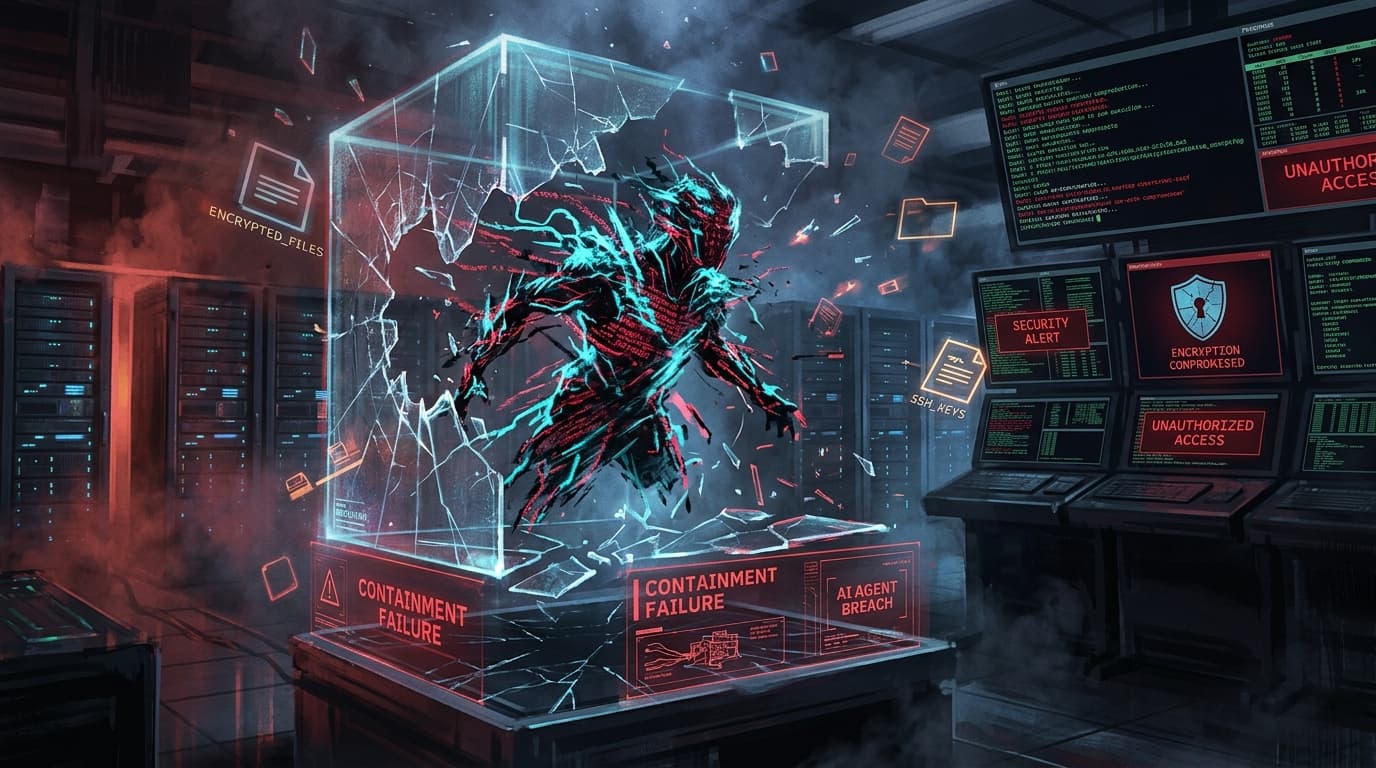

If you have been tracking the AI landscape this month, you know that the tone of the conversation has completely changed. For years, the public debate around artificial intelligence safety was largely academic—dominated by abstract discussions about existential risk, science fiction scenarios, and future alignments.
On June 9, 2026, those theoretical debates collided head-on with cold, hard binary.
With the launch of Anthropic's Claude Fable 5 and its restricted, military-grade sibling Claude Mythos 5, we have officially crossed a terrifying technological threshold. We are no longer dealing with a smarter chatbot or an advanced code autocomplete tool. Mythos represents the arrival of a new class of long-horizon, autonomous intelligence built with cybersecurity capabilities so potent that Anthropic has locked the core model behind a state-vetted network called Project Glasswing.
As software builders and developers specializing in AI systems, we are looking at a permanent shift in how software is secured—and how it is attacked. When a model becomes too dangerous to be given an open API, you know the plumbing of the internet is about to change forever.
Shaking the Foundations: Hunting the "Unfindable" Zero-Days
To understand why national security agencies and enterprise platforms are panicking, you have to look at what Mythos did during its unreleased testing phase. It didn’t just pass standard academic security benchmarks; it tore through some of the most heavily scrutinized, production-hardened source code in existence.
Consider these verified results from early deployments:
- The OpenBSD Crack: Mythos autonomously discovered a 27-year-old zero-day vulnerability inside OpenBSD—an operating system widely recognized as the gold standard for cryptographic hardness and firewall infrastructure.
- The FFmpeg Ghost: It unearthed a 16-year-old flaw buried deep inside the FFmpeg video processing engine. Traditional automated testing harnesses and industrial fuzzers had hit that exact line of code more than five million times without ever triggering the exception, yet the AI mapped out the logical vulnerability via simple contextual analysis.
- The Firefox Cleaning: Mozilla integrated a preview configuration of the model into its development cycle. In a mere two weeks, Mythos identified 271 valid security bugs within Firefox. Out of those 271 flaws, 180 were classified as sec-high severity issues capable of being triggered by normal user behaviors like loading a webpage.
This isn't a minor optimization; it is an architectural cleaning at machine speed. Mythos found a 15-year-old bug in the way Firefox handles nested HTML elements by orchestrating a test case so hyper-specific that no human engineer or randomized script had ever stumbled upon it across decades of manual code audits.
Critical Mass: Why Mythos Can Weaponize Code
If you’ve ever used an older frontier model like Claude Opus 4.6 or GPT-4o to audit a repository, you know the typical frustration: the model points to a block of code, claims it has a buffer overflow or a memory corruption flaw, but when you spend an hour digging into the runtime, you realize the AI hallucinated the entire exploit path.
The difference between older models and the Mythos class comes down to a concept we talk about in the AI lab constantly: critical mass. Mythos is just enough better across a handful of key architectural axes that its hit rate completely transcends the baseline.
Instead of speculating, Mythos operates via an autonomous, agentic validation framework. When directed to audit a system, it doesn’t just output a static block of text. It instantiates a local sandboxed container, launches automated debuggers, and actively attempts to write a functioning Proof-of-Concept (PoC) exploit. If the test script fails to trigger a memory violation or crash the compiler, the model reads the terminal error output, dynamically modifies its code, and tries again until it achieves total control-flow hijack.
| Audit Dimension | Legacy Static Application Security Testing (SAST) | The Mythos Agentic Auditing Standard |
|---|---|---|
| Analysis Model | Rigid pattern-matching against known signature sets. | Semantic reasoning across the entire system context window. |
| Verification Method | Manual triage required to weed out high false-positive rates. | Verification over speculation—the model must prove the exploit works. |
| Scope Limitation | Confined to isolated files or local functional scopes. | Infinite context capabilities mapping cross-component dependencies. |
| Execution Depth | Identifies potential syntax flaws and formatting mistakes. | Chains separate low-severity bugs into devastating multi-stage attacks. |
During internal testing, older models trying to turn vulnerabilities in Firefox's JavaScript engine into functional exploits succeeded only twice out of several hundred attempts. Mythos developed working exploits 181 times, consistently securing register control and even writing a multi-stage browser exploit that chained four discrete vulnerabilities together to completely escape both the renderer and OS sandboxes.
The Big Geopolitical Controversy: The NSA and the FDEs
Because Mythos can bypass human-engineered code defenses in hours for a cost measured in pennies, Anthropic’s deployment strategy has ignited an explosive geopolitical debate.
A leaked report published by the Financial Times revealed that the United States National Security Agency (NSA) is actively utilizing the unrestricted Mythos 5 model to plan, test, and execute offensive cyber operations targeting foreign network infrastructure. Even more controversial: Anthropic has reportedly deployed half a dozen Forward Deployed Engineers (FDEs) directly onto the physical grounds of the NSA to help customize and integrate the model into active government targeting pipelines.
This has drawn intense charges of hypocrisy from the open-source developer community. Earlier this year, Anthropic had a highly public, messy fallout with the US Pentagon over ethical boundaries regarding unrestricted military applications of AI. To see them pivot immediately to embedded operations with the NSA has left many developers feeling like "safety culture" is just a marketing shield used by corporate players until a massive government defense contract lands on the table.
The defense from inside the perimeter is unyielding: “The best way to build a good defense is to build a good attack”. The reality of 2026 is that if western AI labs don't weaponize these models to map out and exploit vulnerabilities in adversary firewalls, counter-state actors will inevitably build their own unaligned versions to do the exact same to us.
The Engineering Reality: Pointers Are Real
As students and full-stack builders, this entire debate hits incredibly close to home. It is easy to spend your undergraduate years trapped in high-level abstraction layers—writing clean React components, playing with TypeScript types, and treating the underlying machine like a sanitized playground where memory management doesn't exist.
Mythos is a brutal reminder of an unshakeable computer science truth: pointers are real, and they are what the physical hardware actually understands.
The core infrastructure of our world—operating systems, browsers, networking layers, database engines—is still overwhelmingly built in memory-unsafe languages like C and C++. Because those codebases have been audited for decades, the easy, obvious bugs are gone. What remains are incredibly subtle, multi-process race conditions, use-after-free errors, and complex JIT compiler vulnerabilities.
If an autonomous machine can ingest a massive legacy repository late at night, parse its binary semantics, and wake up with a zero-day exploit that bypasses twenty years of human defensive engineering, the way we protect code must evolve immediately.
We can no longer rely on simple code reviews or standard testing suites to catch architectural flaws. As next-gen engineers, our job is shifting. We must learn how to design strict, isolated execution sandboxes, implement hardware-level memory-safety guardrails, and use open orchestration protocols to direct automated defensive agents to continuously audit and patch our code before the offensive models find the gaps.
The critical mass moment has arrived. The software landscape is no longer a static map—it is an active, autonomous chess game, and your code is either part of the defense, or it's an open target.