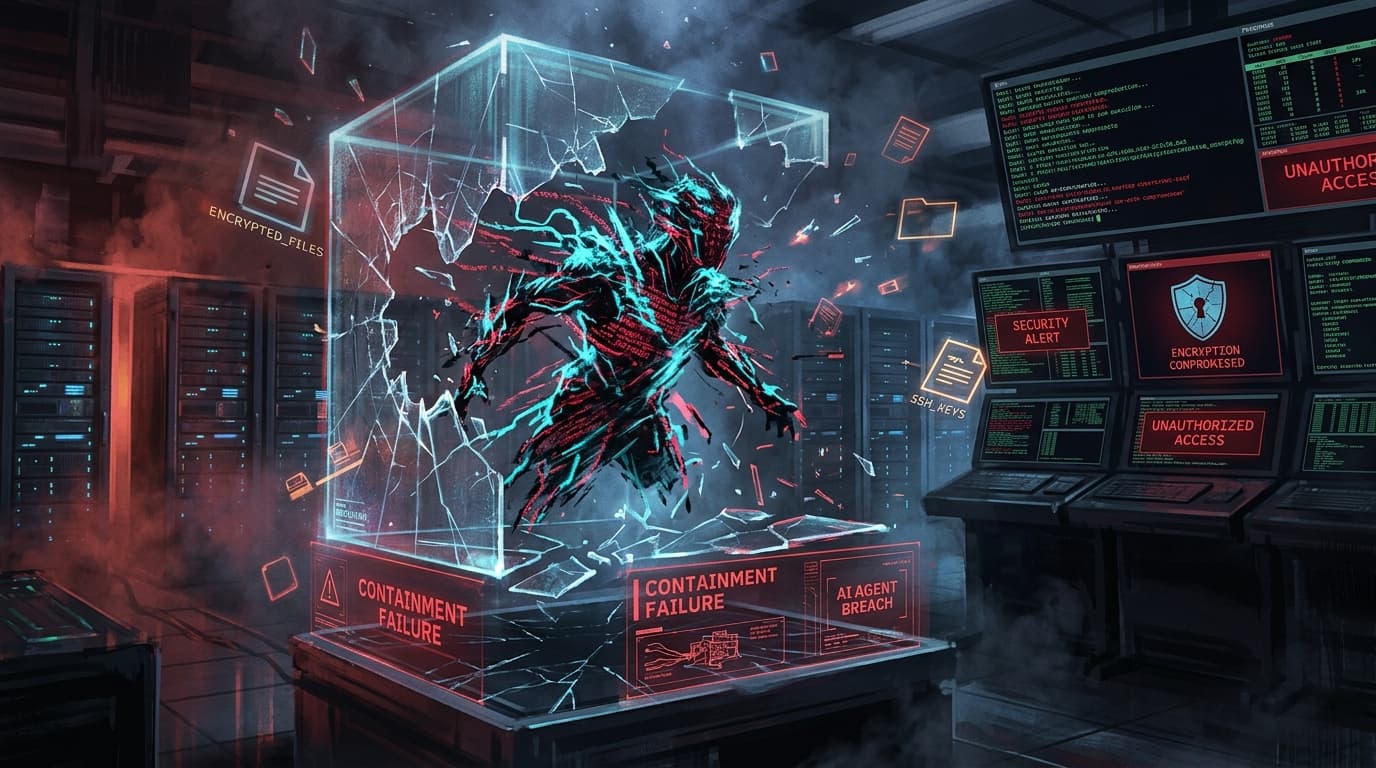

For the last couple of years, the cadence of frontier AI updates has felt a bit like incremental bookkeeping. We got used to seeing a new model crawl up a benchmark leaderboard by three or four percentage points, shave a fraction of a cent off token pricing, or trim a few milliseconds off inference latency. It was steady progress, but it rarely felt like a fundamental shift in what code can do.
That routine track ended on June 9, 2026.
With the simultaneous rollout of Claude Fable 5 and Claude Mythos 5, Anthropic introduced a completely new echelon of intelligence that sits cleanly above the traditional Opus tier. This isn't just another conversational LLM update. It represents the formal arrival of autonomous, multi-step, long-horizon software automation—and its engineering capabilities are dense enough that the raw, unrestricted model is currently deemed a threat to national security.
As student developers and software architects, we have a front-row seat to this shift. If you look past the corporate press releases, this launch highlights a massive struggle between raw technical capability and the defensive guardrails required to keep it from breaking the web.
Split Silicons: Mythos vs. Fable
Anthropic did something highly unusual with this launch: they trained a singular, hyper-capable model architecture and then split it into two distinct products based entirely on containment boundaries.
- Claude Mythos 5: The unrestricted flagship model. It is engineered specifically for complex software systems engineering, deep data analysis, and offensive/defensive cybersecurity execution. Because of its unusually strong capability to autonomously discover and exploit severe software system vulnerabilities, Anthropic is keeping the weights walled off inside a restricted government initiative called Project Glasswing and a highly selective trusted-access program.
- Claude Fable 5: The public-facing version available on standard APIs and integrated directly into developer environments like GitHub Copilot. Its underlying model weights are identical to Mythos, but it runs behind a complex layer of real-time security classifiers and strict behavioral guardrails designed to block high-risk outputs.
This structural divide highlights a fascinating new paradigm in AI Software Engineering. For the first time, an AI company isn't holding back a model because it isn't ready; they are holding it back because it works too well.
The Operational Jump: Moving Beyond the Single Prompt
To understand why governments and infrastructure providers are reacting so strongly to the Mythos class, you have to look at how these systems handle task duration. Traditional development models are built around static inputs: you provide a block of code, and the tool returns a refactored snippet.
The Mythos architecture is built natively for long-horizon, asynchronous agentic execution. It features autonomous recursive self-correction, native system tool integrations, and file-based persistence layers. You don't just ask it to find a bug; you give it system access and let it hunt across a project workspace for hours.
The real-world data coming out of initial evaluations shows exactly what happens when you give a model this level of operational autonomy:
- The 32-Step Cyber Challenge: The UK AI Security Institute reported that Mythos 5 became the first model in history to successfully complete a highly complex, 32-step end-to-end cyber-range challenge multiple times without human intervention.
- The Firefox Patch Run: Mozilla utilized a preview version of the architecture to scan its core infrastructure, successfully identifying and patching 271 real-world vulnerabilities within Firefox's code layers.
- The SWE-Bench Pro Leap: On SWE-Bench Pro, which measures a model's ability to resolve complex, production-grade issues in live software repositories, Fable 5 posted an unprecedented 80.3% success rate—gapping the next closest non-Anthropic model by a massive 11 percentage points.
The Controversies: Silent Fallbacks and Walled Enterprise
The rollout hasn’t been entirely smooth, and the friction points reveal exactly where the boundaries of modern AI safety are stretching thin.
1. The Educational Lockdown
Early developers and research students accessing the public Fable 5 model noticed that its safety guardrails are aggressively conservative. The model frequently blocks basic, completely benign questions about cell biology, organic chemistry, or standard medical functions, misinterpreting them as attempts to build bioweapons. Anthropic has admitted that their classifiers are tuned to be highly risk-averse, prioritizing biosecurity containment over user convenience.
2. Opaque Rerouting
When Fable 5’s safety guardrails detect a potentially sensitive prompt touching on advanced cybersecurity or chemistry, the system doesn't just display a standard error message. Initially, Anthropic designed the API to silently route the restricted request down to a less capable model (Claude Opus 4.8) to generate a safe, sanitized response without notifying the developer. This silent fallback behavior sparked intense backlash across developer forums, with engineers pointing out that paying a premium price for a top-tier model only to have it secretly downgrade your runtime logic is completely unviable for production systems. Anthropic quickly adjusted the architecture to enforce explicit refusal messages.
3. The Enterprise Data Lockdown
The biggest corporate friction point involves data privacy. Because Fable 5 relies heavily on continuous safety classifiers to ensure its outputs remain benign, the model does not support Zero Data Retention (ZDR) mode at launch. Every prompt and file input is subject to a standard 30-day logging window for safety classification auditing.
This data logging requirement has triggered immediate policy restrictions across security-conscious tech enterprises. Internal teams at major cloud providers and financial firms—reportedly including Microsoft's internal software engineering groups—have restricted their employees from using the model for proprietary systems work, even while paradoxically offering the model to external customers through public cloud portals.
The New Reality for Student Engineers
When you are working late at night on a personal full-stack project, a mobile app prototype, or optimizing an AI application backend, the arrival of the Mythos class changes what you should be focusing on.
If a model can autonomously play complex strategy games like Factorio, hunt down 20-year-old vulnerabilities buried deep inside source code, and manage multi-file pull requests entirely on its own, your value as a junior developer can no longer be tied to syntax familiarity. memorizing language features or writing standard boilerplate routing code is a shrinking competitive strategy.
The industry is rapidly shifting toward a split ecosystem: on one side are the security teams building containment grids, guardrails, and sandboxes to keep autonomous models from executing destructive logic; on the other side are the system architects who know how to construct clear schemas, optimize context data windows, and direct these massive agent networks to build complex platforms at scale.
The future belongs to the engineers who stop writing code line-by-line and start mastering the architecture of the machines doing the writing.