For the last three years, the narrative surrounding the hardware behind artificial intelligence has been completely locked inside the cloud. We watched NVIDIA become one of the most valuable companies on earth by selling massive, six-figure server racks to hyper-scalers. The message to independent developers, creators, and students was subtle but unyielding: Real intelligence happens in our multi-million dollar datacenters; your job is to pay for the API tokens and stay connected to our cloud.
But earlier this month at GTC Taipei 2026, Jensen Huang completely flipped the script.
NVIDIA is aggressively pushing out of the datacenter silo and executing a total takeover of client-side computing. With the formal launch of the RTX Spark superchip and a direct platform partnership with Microsoft, the baseline definition of a personal computer has been permanently rewritten. We are moving away from the era of a laptop being a simple window into a corporate cloud, and entering the age of the sovereign, local supercomputer.
As someone spending late nights tracking AI development, optimizing script deployments, and constantly trying to eke out more performance from local rigs, this hardware evolution feels deeply personal. The playground just expanded, and the constraints that used to hold independent builders back are melting away.
Inside the Silicon: The 2026 Nvidia AI PC Architecture
Let's look past the marketing gloss and break down the actual engineering specs of the new NVIDIA AI PC ecosystem, because the hardware layout is radically different from the standard x86 architectures we’ve been coding on for decades.
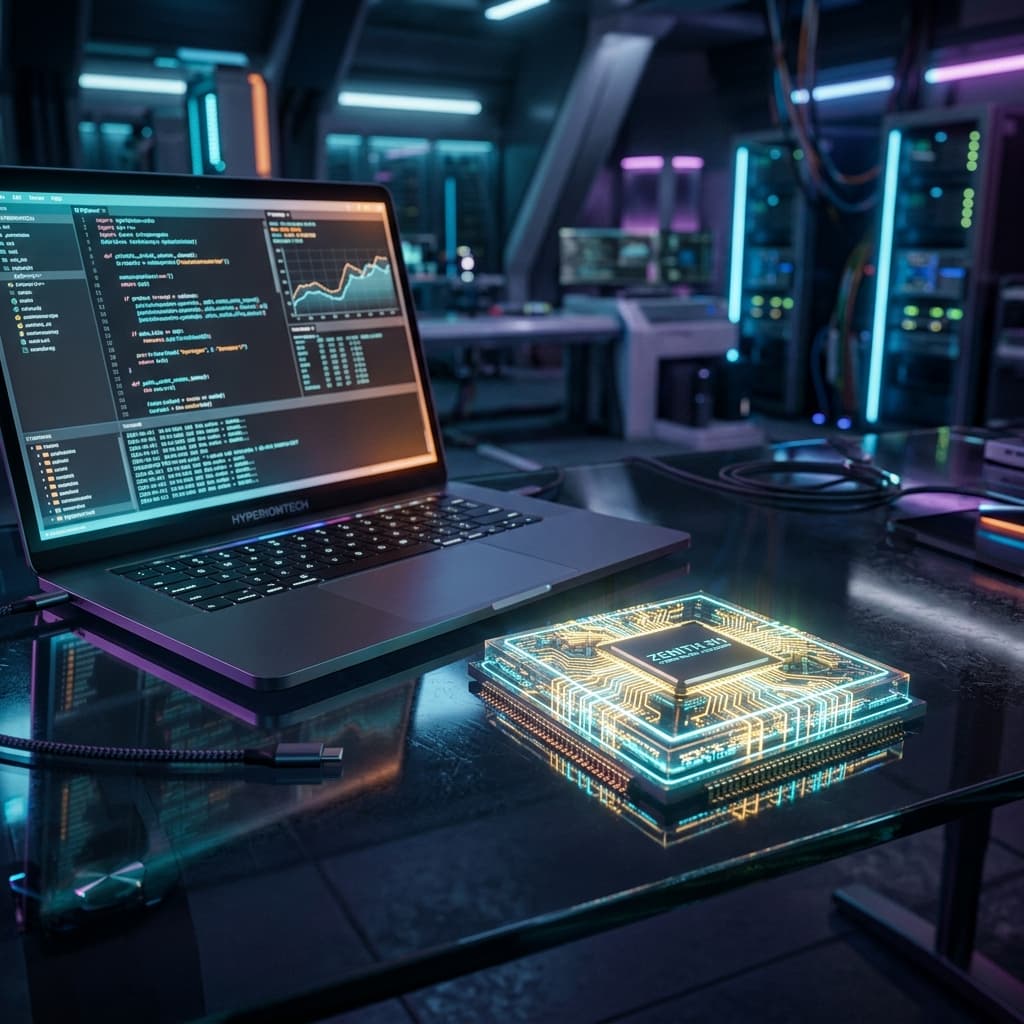
The flagship consumer silicon is the NVIDIA RTX Spark superchip, an extreme-codesigned Arm system architecture built in partnership with MediaTek. It completely eliminates the traditional division between your main processor and your discrete graphics card by fusing them over a high-speed NVLink-C2C chip-to-chip interconnect:
- The Compute Core: A 20-core NVIDIA Grace CPU stacked directly alongside a Blackwell-generation RTX GPU featuring 6,144 CUDA cores and fifth-generation Tensor Cores utilizing hyper-efficient FP4 precision.
- The Memory Pool: Up to 128GB of LPDDR5X unified memory.
- The Output Threshold: The superchip delivers 1 petaflop of local AI compute within a highly efficient thermal envelope.
For developers, that unified memory architecture is the ultimate holy grail. If you've ever tried to host a mid-sized open model locally on a consumer setup, you know the exact point of failure: your dedicated VRAM fills up instantly, forcing the system to shuffle data across a slow PCIe bus to system RAM, dropping your generation speeds down to an unuseable crawl.
By running on a massive, unified 128GB memory pool, the Blackwell GPU has direct, high-bandwidth access to the entire workspace. Microsoft capitalized on this at Build 2026 by rolling out the Surface RTX Spark Dev Box—a premium desktop workstation capable of hosting heavy, high-reasoning 120-billion parameter models locally with an on-device context window scaling all the way up to 1 million tokens.
Local AI vs. Cloud AI: The Architectural Re-alignment
This shift isn't just a win for local frame rates or smoother code autocomplete; it represents a fundamental re-alignment of software infrastructure. When you move the execution layer down to the edge, the entire economics of product building transforms.
| Architectural Vector | The Cloud-Dependent API Stack | The 2026 Local Edge AI Stack |
|---|---|---|
| Operational Overhead | Variable, per-token billing that scales dangerously with user activity. | Fixed, zero-marginal-cost processing powered entirely by local silicon. |
| Data Gravity & Privacy | High-risk streaming of internal files and user contexts to third-party endpoints. | Zero data leak vector—all system analysis and indexing stays inside local directories. |
| System Latency | Network-bounded round-trips ranging from 200ms to over 2 seconds. | Instantaneous, high-frequency execution loops optimized over direct memory buses. |
| Task Autonomy Limits | Restricted to transient, single-prompt requests due to connection timeouts. | Long-running background agents executing complex multi-file refactors 24/7. |
When you are bootstrapping an independent web app, building a custom automation script, or testing an interactive creation workflow late at night, running on a cloud credit line forces you to write defensive code. You have to constantly prune context, monitor billing alerts, and worry about what happens if an agent gets caught in a loop. Shifting your testing loop into a local, unmetered environment means you can let your development agents iterate thousands of times over your repositories completely for free.
The Core Controversy: The Battle for Operating System Autonomy
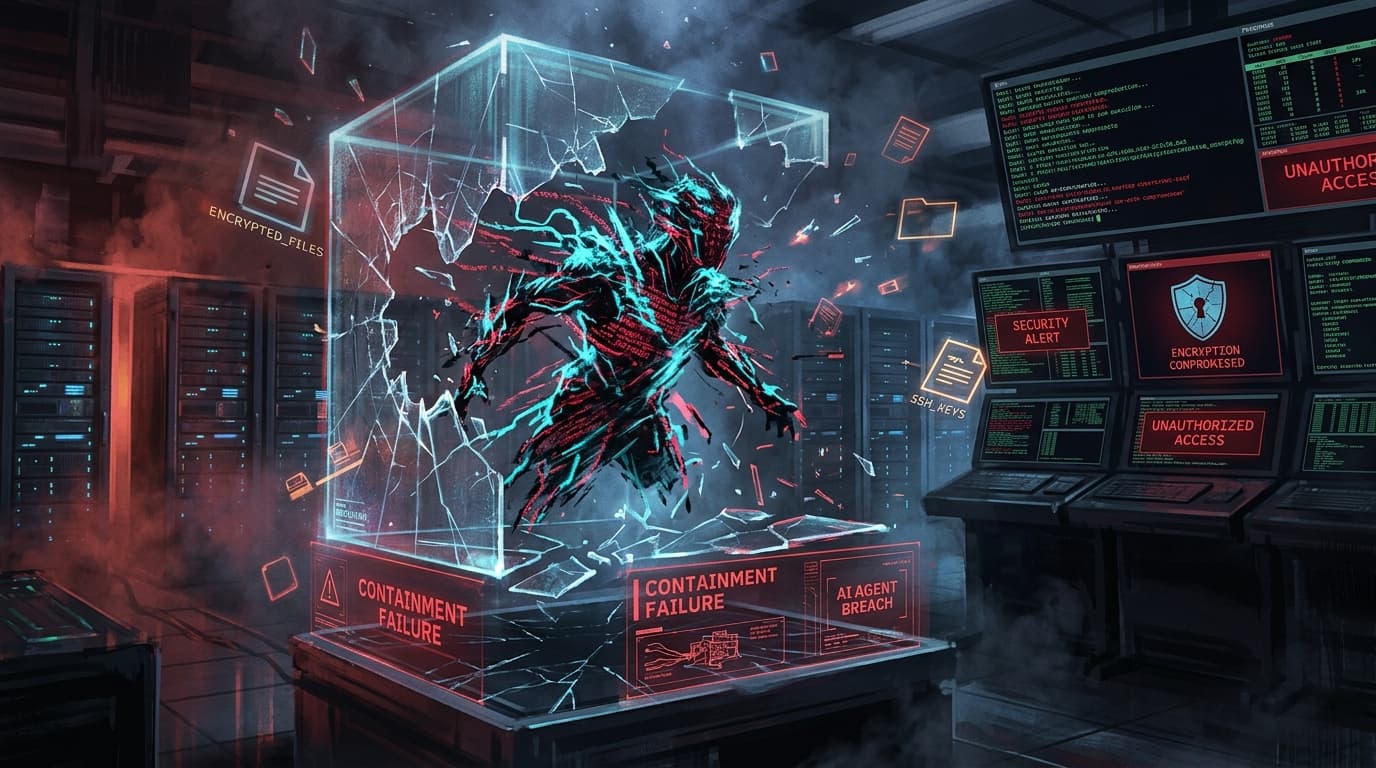
However, unleashing high-performance, long-running agentic loops natively on your primary machine introduces a severe system security controversy.
An effective local AI assistant cannot live inside a locked browser sandbox; it needs the power to run terminal diagnostics, read project directories, update environment parameters, and modify code files on your behalf. But giving an autonomous background script direct access to your root file structure is an absolute nightmare if the system suffers an intense semantic hallucination or processes a prompt-injection attack hidden inside a third-party data stream.
To address this exact friction point, NVIDIA and Microsoft have co-engineered a security containment framework:
- Windows Containment Primitives: The operating system isolates the agent's workspace within secure, hardware-insulated sandboxes.
- NVIDIA OpenShell: A unified management plane that wraps strict network and directory policies around the local model.
If you download an open-source automation agent via a local orchestration wizard like NemoClaw, OpenShell enforces strict verification rules. The local agent (running a model like Qwen 3.6 35B) can execute internal builds or refactor scripts within its sandbox, but it is explicitly blocked from reaching outside its designated folder boundaries or accessing system credential managers without manual human confirmation.
The Horizon: Owning the Edge Stack
NVIDIA’s massive pivot toward the edge proves that the future of software development belongs to the architects who know how to manage local compute pipelines.
The baseline expectation for a software engineer is shifting away from basic coding syntax towards context architecture and model orchestration. If your competitive strategy as a developer or a creator is simply writing lines of code that an on-device superchip can execute in a fraction of a second, you are running out of runway.
Stop treating AI as a distant cloud service that you rent monthly. Invest your energy into learning how to deploy and tune local AI models. Master the frameworks like TensorRT-LLM that accelerate edge performance, understand how to structure clean tool registries using open protocol schemas, and learn to build robust, sandboxed environments. The supercomputers have officially left the server rooms and landed right on our desks—and the builders who win this era will be the ones who know exactly how to command the silicon sitting right in front of them.