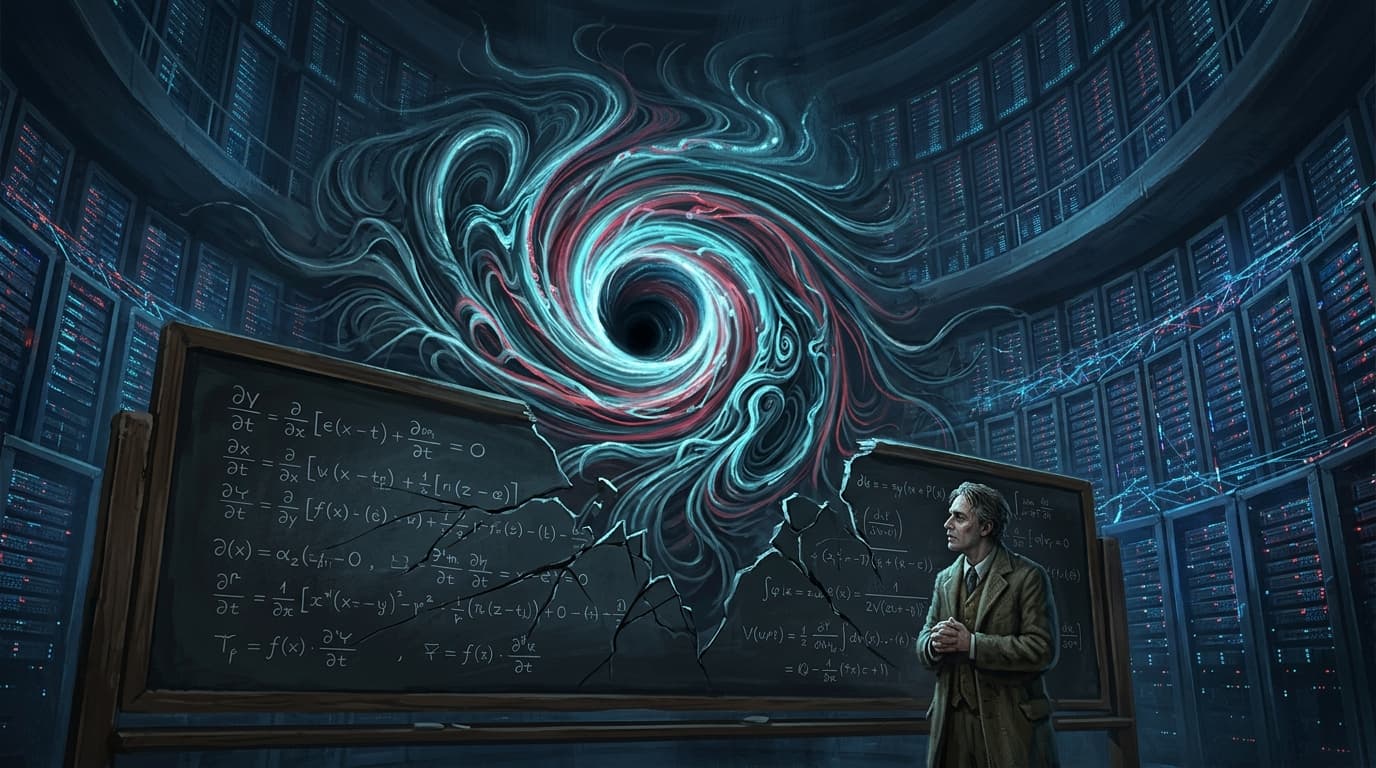
The image of the scientist—hunched over a microscope, scribbling furiously in a leather-bound notebook—is one of our most enduring cultural tropes. It’s a vision of solitary genius, human intellect wrestling with the mysteries of the universe. But in mid-2026, I’m seeing that vision transform into something profoundly different, and dare I say, more collaborative.
We’ve talked a lot about AI’s role in automating office tasks or generating code. But the most exciting shift happening right now, arguably the third most critical trend in today's report, is the emergence of AI as an active partner in scientific discovery.
Beyond the Spreadsheet
For decades, computers were the "calculator" of science. They stored data and performed complex math. Today, the role has shifted. AI models aren't just processing results; they are helping to define the questions.
We are entering an era where an AI system can analyze vast, unstructured datasets that no human could parse in a lifetime, identify obscure patterns, and suggest testable hypotheses. It’s effectively acting as a digital lab assistant, but one with the capacity for synthetic reasoning across fields as diverse as genomics, materials science, and climate modeling.
The Creative Spark
Why does this feel so personal to me? Because science has always been fundamentally creative—it requires a leap of intuition to connect the dots between seemingly unrelated phenomena.
Seeing an AI model generate a hypothesis for a novel battery material is not just a triumph of compute power; it’s a form of machine creativity. When an AI can propose an experiment, control the robotic hardware to execute it, analyze the output, and refine its approach based on the failure or success of that iteration—it’s conducting a cycle of inquiry that mimics the human scientific method.
The New Collaborative Reality
This isn’t about replacing the scientist. It’s about amplification. The human remains the visionary, the one who sets the ethical boundaries, determines the research scope, and ultimately interprets the meaning of the discovery. The AI, in turn, provides the cognitive bandwidth to scale those human insights into tangible breakthroughs at unprecedented speeds.
We are, in essence, entering an era of "hybrid intelligence" where our greatest discoveries will be the result of a symbiotic relationship between human curiosity and synthetic intellect.
It’s a future that is equal parts technical and awe-inspiring. And as we continue to lean into these AI-partnered workflows, I find myself wondering: if we can accelerate the pace of scientific understanding this significantly, what mysteries might we solve by the end of this decade?
The future isn’t just being written; it’s being discovered, one automated experiment at a time.