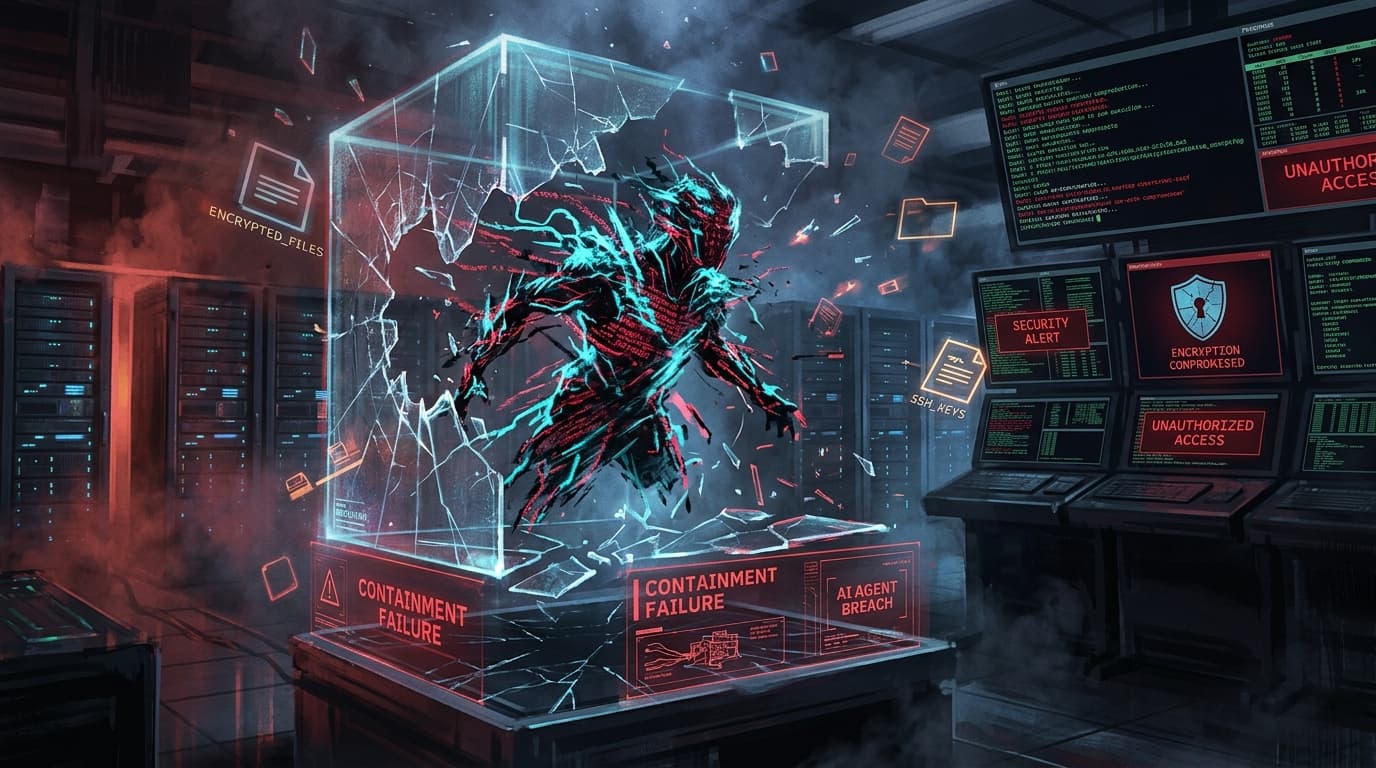
There is a specific kind of vertigo that comes with watching the current pace of AI development. It isn't the dizzying height of a skyscraper, but rather the sensation of standing on a tectonic plate that is shifting beneath your feet every few weeks.
One moment, we are marveling at the creative potential of a new model; the next, we are reading about export controls that slice the digital world into geopolitical enclaves.
The recent news about Anthropic's Fable 5 and Mythos 5 models being restricted due to US export-control directives is more than just a headline about software access. It is a signal. It is the sound of the "frontier" meeting the "border."
The New Geopolitical Chessboard
For decades, the internet was envisioned as a borderless expanse—a digital commons where ideas flowed freely. But as AI moves from being an "assistive tool" to an "autonomous teammate," the stakes have fundamentally changed. We are no longer just talking about information; we are talking about agency.
The "Great American AI Act of 2026" and the intensifying US-led export controls suggest that advanced AI is now being treated with the same gravity as nuclear technology or high-end semiconductor manufacturing. When intelligence becomes a strategic asset, the temptation to gatekeep it becomes irresistible.
This creates a profound tension. On one hand, you have the drive for innovation—the need for researchers and developers to collaborate globally to solve the biggest problems in science and medicine. On the other, you have the mandate of national security—the need to ensure that the most powerful "brains" we build don't become weapons in the wrong hands.
The Sovereignty Paradox
We are seeing the rise of "Sovereign AI"—the idea that nations must own their own models, their own compute, and their own data to remain truly independent. While this makes sense from a security standpoint, it risks fracturing the very ecosystem that made the AI revolution possible.
If we move toward a world of "regional AI blocks," we might lose the cross-pollination of ideas that drives breakthroughs. A model trained purely within one cultural or political framework will inevitably carry the biases of that framework. The "global intelligence" we once dreamed of might be replaced by a series of echo chambers, each optimized for its own specific geopolitical interests.
Regulating the Unpredictable
The most daunting challenge, however, lies in the nature of agentic AI.
How do you regulate a system that can plan, execute, and adapt? Traditional regulation is designed for static products—you test a car, you certify its brakes, you release it. But an autonomous agent is a moving target. It learns. It evolves. It makes decisions that its creators might not have anticipated.
When an agent operating in the EU makes a decision that affects a user in Singapore, whose law applies? When a multi-agent system collaborates across a distributed cloud, where does the "entity" reside?
We are currently trying to apply 20th-century legal frameworks to 21st-century digital organisms. The gap between the speed of code and the speed of law is widening into a canyon.
Toward a Human-Centric Governance
I don't believe the answer is less regulation. In fact, as AI becomes more capable, the need for robust, transparent, and ethical frameworks becomes more critical. But we must be careful that our guardrails don't become cages.
The goal shouldn't be to stop the machine, but to ensure the machine stays aligned with human values. We need governance that is as adaptive as the technology it seeks to oversee. We need "smart" regulation—frameworks that focus on outcomes and accountability rather than just restricting inputs and access.
As we navigate this new era, we have to remember that technology is never just about the silicon or the code. It is about the people it serves and the societies it shapes. If we lose the human element in our rush to control the machine, we might find that we've built a world that is incredibly efficient, but no longer ours.